
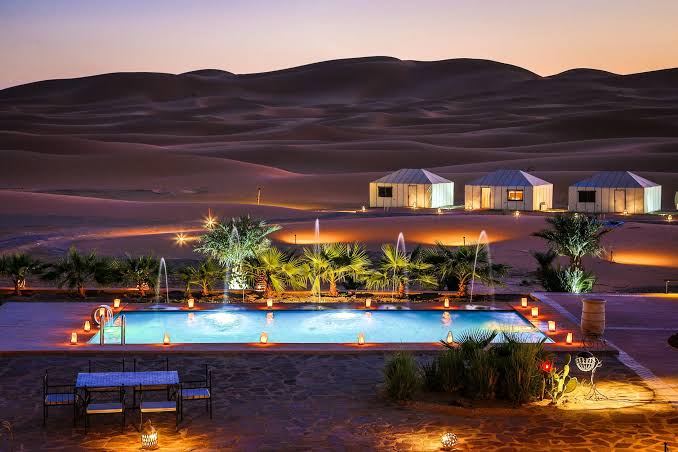
In short: Yes, the Morocco desert gets very hot in summer (June to August), with Sahara dunes like Merzouga and Zagora regularly hitting 42-48°C in the afternoon. It is still doable if you travel at dawn and dusk, but the Agafay stone desert near Marrakech, a rocky landscape rather than sand dunes, is a cooler, closer alternative for a summer taste of the desert.
Planning a desert trip? See all private Morocco desert tours from Marrakech.
How hot does the Morocco desert actually get in summer?
Summer heat in Morocco’s deserts is real. In the Erg Chebbi dunes around Merzouga, daytime highs in July and August commonly sit between 42°C and 48°C, and the sand surface climbs far higher, hot enough to burn bare feet by mid-morning. Zagora and the M’Hamid area are similar. Nights bring some relief, dropping to around 25-30°C, which is warm but sleepable in an open tent. The Agafay desert, a rocky moon-like expanse about 40 km from Marrakech (roughly 40-45 minutes by car), runs a few degrees cooler than the deep Sahara but still reaches the high 30s to low 40s at midsummer. The point that catches travelers out is the dry, shade-free intensity of midday, not the numbers alone.
Is it safe to visit the Sahara in July and August?
It is safe if you respect the rhythm of the desert. Locals and experienced guides avoid activity between roughly 12:00 and 16:00, when the sun is most punishing. Camel treks, dune walks, and quad rides are scheduled for early morning (before 9:00) or late afternoon into sunset. Dehydration and heat exhaustion are the main risks, so plan to drink 3-4 liters of water per person per day, wear a hat and light long sleeves, and never hike the dunes barefoot in the heat of the day. Reputable camps in Merzouga and Agafay lay on shaded lounges, cold water, and often a plunge pool, which makes the hottest hours genuinely comfortable.
Which desert is best for a summer trip?
If you have limited time or are heat-sensitive, choose Agafay over the deep Sahara. It saves the long haul (Marrakech to Merzouga is roughly 560 km and 9-10 hours each way, usually done as a 3-day tour), lets you sleep in a tented camp with a pool, and still delivers sunset views, camel rides, and star-filled skies, just over stony hills instead of tall dunes. If you have your heart set on the classic golden Erg Chebbi dunes, Morocco’s tallest at up to about 150 m, go anyway but keep the itinerary short and pool-focused. Our Morocco Desert guide compares the main regions in detail so you can match the landscape to your dates.
What should you pack for desert heat?
Pack for both extremes: fierce sun and warm nights. Bring a wide-brim hat or a cotton scarf (cheche) that doubles as sun and dust protection, high-SPF sunscreen, UV sunglasses, and breathable light-colored clothing that covers the skin. A reusable water bottle, electrolyte sachets, and lip balm are essentials. For the night a single light layer is enough in summer, unlike winter when Sahara temperatures can fall near freezing. Closed shoes protect your feet from hot sand, and a small headlamp helps around camp after dark.
How much does a summer desert trip cost?
Summer is low season for Moroccan desert tourism, which means better prices and fewer crowds. A shared Agafay sunset experience with dinner and a camel or quad ride typically runs 45-80 EUR per person. A shared 3-day Marrakech-to-Merzouga tour with transport, meals, and a camp night usually falls in the region of 80-150 EUR per person, with private tours and premium tented camps (private bathrooms, a pool) costing more. Booking directly with a local agency avoids marked-up middleman fees.
When is the best time to go instead?
The desert’s best season overall is October to April. If your dates are flexible, the mildest sweet spots are March to April and October to November, when daytime highs sit around 25-32°C and nights are comfortable. These give you dune walks at almost any hour and the clearest skies. Winter (December to February) is pleasant by day but genuinely cold, sometimes freezing, at night in the Sahara. For a deeper seasonal breakdown, see our Morocco Desert guide before locking in your trip.
Frequently Asked Questions
Is the Morocco desert too hot to visit in summer? Not too hot to visit, but too hot for midday activity. Schedule everything for sunrise and sunset, rest in the shade or a pool during the afternoon, and you can enjoy it comfortably.
Which is cooler, Agafay or Merzouga, in summer? Agafay is usually a few degrees cooler and far closer to Marrakech (about 40 minutes versus 9-10 hours), making it the easier summer choice.
Can you still see the stars and ride camels in July? Yes. Camel rides run at dawn and dusk at a gentle walking pace, and summer nights offer some of the clearest, warmest stargazing of the year with no need for heavy clothing.
How much water should I carry per day? Plan for 3-4 liters per person per day in summer, more if you are active, and sip regularly rather than waiting until you feel thirsty.
Are summer desert prices cheaper? Generally yes. Summer is low season, so camps and tours often cost noticeably less than peak spring or autumn rates.
👉 Planning your trip? Ask our local agency on WhatsApp.