
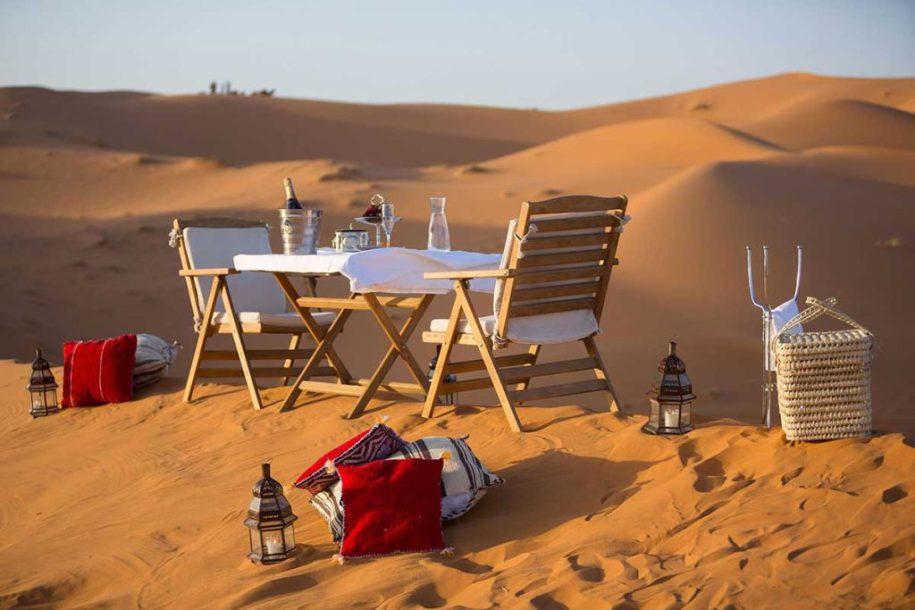
In short: A desert cooking class in Morocco usually happens right at your camp on the edge of Erg Chebbi near Merzouga (or the remote Erg Chigaga dunes), where a local cook teaches you to build a tagine or knead khobz bread over coals. It is best booked as an add-on to a multi-day tour between October and April, and adds a hands-on hour or two to an otherwise scenic itinerary.
Planning a desert trip? See all private Morocco desert tours from Marrakech.
What actually happens in a desert cooking class?
Forget a polished studio kitchen. Out in the Sahara, “class” means squatting near a low table or a fire pit while a cook, often the person who feeds the whole camp, walks you through one or two dishes. The classic is chicken or vegetable tagine: you layer onions, preserved lemon, olives and a spice blend (cumin, ginger, turmeric, a pinch of saffron) into the conical clay pot, then let it steam slowly over charcoal. The lid does the work, and the wait is the point. Some camps add mint tea theatre, the long pour from height, and flatbread baked in the sand or on a griddle. When I did this near Merzouga, the most useful thing I learned was patience: a real tagine is not stirred, it is trusted.
Where in the desert can you do it?
The two genuine dune destinations are Erg Chebbi at Merzouga, where the tallest sand reaches roughly 150 metres, and the more remote Erg Chigaga near M’Hamid, reached by 4×4 over a couple of hours of track. Both have desert camps that can arrange cooking sessions on request. Do not confuse these with Agafay, the rocky stone desert only about 40 minutes from Marrakech: Agafay has camps and cooking experiences too, but it is a lunar plateau, not Sahara dunes. If your heart is set on golden sand while you cook, aim for Merzouga or Chigaga. If you are short on time, Agafay delivers a similar hands-on meal far closer to the city.
How do I fit it into a Morocco tour?
Most travelers reach the dunes on a road trip rather than a flight. From Marrakech to Merzouga is around 560 km and 9-10 hours of driving, which is why it is normally sold as a 3-day loop with an overnight in the dunes. From Fes the run to Merzouga is shorter, roughly 470 km and 7-8 hours. If you only have two days, the Marrakech to Zagora route (about 360 km, around 7 hours) reaches smaller dunes at the edge of the Draa Valley. A cooking class slots naturally into the camp evening or the following morning, so ask for it when you book rather than expecting it by default. For the full lay of the land, see our Morocco Desert guide.
When should I go?
The comfortable window is October to April. Cooking over a fire when the afternoon is already 40C-plus, as it often is in high summer, is miserable, and midday July heat around Merzouga is no joke. Winter flips the problem: days can be pleasant but desert nights get genuinely cold, so an evening class by the fire is lovely as long as you have a jacket. Spring and autumn are the sweet spot, warm enough to eat outside after dark, cool enough to enjoy standing near the coals.
What does it cost?
A cooking class is rarely a headline product with its own fixed price, so be wary of anyone quoting a suspiciously exact figure. It is usually folded into your camp stay or added as a modest extra. For context, a shared 3-day Merzouga tour typically runs about 80-150 EUR per person including transport, camp and meals, and a dedicated hands-on cooking add-on sits on top of that as a small supplement. Private tours and luxury camps cost more. Always confirm what is included, meals, the class, and any tea ceremony, in writing before you commit.
Is it worth doing?
If you enjoy food and want a reason to slow down between camel rides and dune sunsets, yes. It is not a cooking-school certificate; it is an unhurried hour learning a dish you can genuinely recreate at home with a single pot. The value is in the company and the setting, sharing the meal you helped make under a sky with no light pollution. For more ideas on structuring your trip, our related guide covers routes, camps and timing.
Frequently Asked Questions
Do I need any cooking experience? None at all. The cook does the tricky parts and you help with layering, seasoning and shaping bread, so complete beginners are welcome.
Can vegetarians and vegans join? Yes. Vegetable tagine is a Moroccan staple, so ask ahead and the camp can build the class around meat-free dishes.
How long does the class take? Expect one to two hours of active involvement, though the tagine itself simmers slowly, so the full experience blends into your camp evening or morning.
Is Agafay a good alternative if I cannot reach the Sahara? For a short trip, yes. Agafay is only about 40 minutes from Marrakech and many camps there offer cooking experiences, though it is stony desert rather than tall dunes.
Should I book the class in advance? Yes. Camps need to prepare ingredients, so request it when you reserve your tour rather than assuming it happens automatically.
👉 Planning your trip? Ask our local agency on WhatsApp.