
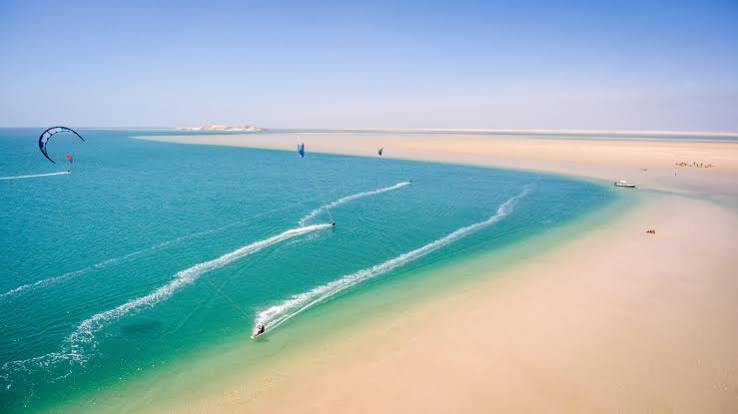
In short: kitesurfing in Dakhla means a huge flat lagoon on one side and real Atlantic waves on the other, with wind that blows for most of the year and turns reliable from spring into early autumn. It sits in Morocco’s far south, so getting there takes some planning, but the payoff is warm-water riding with room to spare and a season that runs long. Below I cover the spots, the wind, the best months, gear, and how to actually get down there.
Where Dakhla is and why kiters go
Dakhla sits on a thin peninsula that reaches out into the Atlantic, roughly 1,200 km south of Marrakech and well past Laayoune. On the sheltered side you get the lagoon: shallow, flat water that stretches for kilometers and stays warm. On the outside you get open ocean with proper swell. Having both within a short drive of each other is the whole draw. Beginners and freestyle riders live on the lagoon, while wave riders head out to the coast when the swell shows up.
The town itself is small and low-key. Most kite camps sit south of the city along the lagoon shore, strung out near the water rather than in town. You come here to ride, eat well (the oysters are local and cheap), and not much else, which is exactly the point for a lot of people.
The spots: lagoon and open ocean
The main lagoon is flat, shallow, and stands waist to chest deep across big areas at the right tide. That makes it forgiving for anyone still nailing water starts, and a playground for freestyle once you can ride upwind. Tides matter here: at low water some sections drain out, and the White Dune area at the far end is best reached when the water pulls back.
For waves, riders head to spots on the ocean side. Foum Labouir sits near the tip of the peninsula and picks up cleaner swell. Other open-water spots down the coast, sometimes reached by a short 4×4 shuttle the camps organize, give you point-break style riding when conditions line up. If you only came for flat water you may never leave the lagoon, and that’s fine.
Wind and the best time to go
Dakhla’s wind is mostly thermal, driven by the temperature gap between the ocean and the desert, so it tends to build through the day and fade in the evening. It blows from a north to northeast direction most of the time, which is side-shore on the lagoon and one reason the spot is so friendly.
You can ride year-round, but the strongest and most consistent months run from about April through September. Spring and summer bring the highest wind percentages and warm air. Winter still delivers plenty of windy days, just with more variety and cooler mornings. If you want the surest bet for wind every day, aim for the late spring to summer window.
| Season | Wind reliability | Water/air feel | Good for |
|---|---|---|---|
| Apr to Sep | Strongest, most consistent | Warm air, mild water | Peak riding, courses, freestyle |
| Oct to Nov | Still frequent, more mixed | Cooler mornings | Quieter camps, decent wind |
| Dec to Mar | Windy days but variable | Cool, wetsuit weather | Off-peak trips, waves |
Gear, wetsuits, and skill level
The water off the Atlantic here is cooler than the sun makes you expect, so most riders wear a wetsuit most of the year. A shorty works in the warmest weeks; a full 3/2 is the safe all-rounder, and you’ll want something warmer if you come in winter. Bring a range of kite sizes if you can, since the wind can swing from moderate to strong across a week.
This is one of the better places in the world to learn. The flat, shallow lagoon, the steady side-shore wind, and camps set up for teaching make it forgiving for first-timers. Schools rent gear and run courses from beginner up to freestyle coaching, so you don’t have to haul your own kit across the country if you’d rather not.
Planning your Dakhla trip? A good camp with lessons and gear rental takes the guesswork out of a first Dakhla kite week, and most bundle airport transfers. Check availability and options.
A typical day on the lagoon
Because the wind is thermal, mornings are often calm. That’s when people sleep in, eat a slow breakfast, or head out to see the White Dune or the oyster farms while the water is still glassy. The breeze usually fills in through midday and holds into the evening, so the afternoon is prime riding time. You’ll see the lagoon fill with kites, then empty again as the wind drops toward sunset and everyone drifts back for tea and dinner.
It’s worth respecting the tide as much as the wind. At low water some parts of the lagoon get very shallow or drain out, which changes where you can ride and launch. The schools know the daily pattern, so on your first days it pays to ask before you rig up rather than walking out and finding yourself in ankle-deep water.
Getting there and where to stay
Most people fly. There are flights into Dakhla, usually connecting through Casablanca, which turns a very long drive into a few hours in the air. Driving is possible but it’s a serious haul down the coast, well over a day from Marrakech, and only worth it if the road trip is part of the plan.
For lodging, the kite camps along the lagoon are the natural base. They range from simple bungalows to more comfortable setups, and most sit steps from the water with on-site kitchens and gear storage. Staying at a camp also means transfers, tide advice, and downwinders are handled for you. If you prefer town, Dakhla city has hotels, but you’ll be driving out to the water each day.
Frequently asked questions
Is Dakhla good for beginner kitesurfers?
Yes. The shallow, flat lagoon and steady side-shore wind make it one of the easiest places to learn. You can stand up across large areas, which takes a lot of the fear out of early lessons.
What months have the most wind?
April through September is the strongest, most consistent stretch. Wind blows year-round, but those months give you the best odds of riding every day.
Do I need my own gear?
No. The camps rent kites, boards, and wetsuits, and run lessons at every level, so you can travel light and pick up what you need on arrival.
How do I get to Dakhla?
Flying is the practical option, usually via Casablanca. Driving from the north is a very long trip down the Atlantic coast and better suited to people who want the overland journey itself.
Planning your trip? Explore our Morocco desert tours from Marrakech and Agafay desert day trips.