
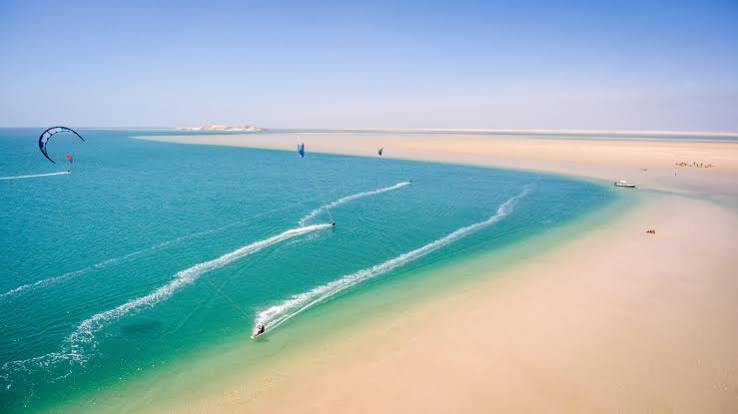
In short: the best time to kitesurf Dakhla is roughly April through September, when the northeast trade wind blows almost every day and the lagoon turns into a huge flat sheet of shallow water. You can ride outside those months too, but the wind gets less reliable and the water is colder. If you only have a week and you want near-guaranteed sessions, aim for late spring or summer.
Why Dakhla is so windy
Dakhla sits on a thin peninsula sticking out into the Atlantic in the far south of Morocco. The coast here catches a steady northeast wind that funnels down the shoreline for weeks at a time. It is thermal and trade-wind driven, so it tends to build through the morning and hold into the evening rather than switching around. That consistency is the whole reason kiters come. On a good stretch in summer you can get five, six, seven riding days in a row without a lay day.
Month by month
The wind runs year-round, but the odds of a windy day and the size of that wind change a lot with the season.
- April to June: the sweet spot for most people. Strong, frequent wind, warming water, long days, and it is not yet peak-crowded.
- July and August: the windiest and busiest stretch. Expect big days and full camps. Book early.
- September: still very good, wind starts to ease a touch toward the end, water at its warmest.
- October to March: quieter and cooler. You will still score windy days, but you will also hit lighter or off days, and you want a thicker wetsuit.
Lagoon versus the ocean side
Two very different rides sit within a short drive of each other. The lagoon, on the sheltered inland side of the peninsula, is shallow and flat. At the right tide you can stand in waist-deep water over a sandy bottom, which makes it one of the easier places anywhere to learn or to work on freestyle and foiling. This is where most of the camps are based.
The open Atlantic side faces the swell. Spots like the area around Foum Labouir and the beaches south of town give you real waves for strapless and wave riding. It is more committing, with current and shore break, so it suits confident riders rather than first-timers. Many camps run a shuttle out to the wave spots on the right days.
Wind and water at a glance
| Season | Wind reliability | Typical crowd | Wetsuit | Best for |
|---|---|---|---|---|
| April to June | High | Moderate | Shorty to 3/2 | All levels, learning |
| July to August | Very high | Busy | Shorty to 3/2 | Strong wind, freestyle |
| September | High | Moderate | Shorty | Warm water, all levels |
| October to March | Mixed | Quiet | 4/3 | Fewer crowds, off-season deals |
Planning your Dakhla trip? Kite camps on the lagoon book out fast in the summer wind season, so it pays to lock in dates and boards early. Check availability and options.
What to bring for a Dakhla trip
Most people bring a quiver in the mid-size range because the wind is strong. A shorty or a 3/2 wetsuit covers spring and summer; the water is cool from the Atlantic even when the air is warm. The lagoon has a sandy bottom, but reef booties are worth having for the shell beds near the shore and for the wave spots. Bring sun cover for the wind, because you will not feel how much sun you are getting until later. Camps rent gear if you would rather not fly with boards, though renting for a full week adds up, so check the numbers.
Spots on the lagoon and beyond
The main lagoon in front of the camps is the everyday spot, flat and forgiving with room to spread out. When the tide drops you get standing-depth water over sand, ideal for downwinders and for practicing new tricks without the punishment of deep water. A short shuttle south takes you to shallower flats that come and go with the tide, popular with foilers and freestylers. On the ocean side, the wave spots near Foum Labouir and the beaches beyond town come alive when there is swell, and camps read the forecast to decide which day to run a trip out there. Nobody rides the same water every day here; the wind and tide keep shuffling the options.
Getting there for the season
The simplest way in is to fly. Royal Air Maroc connects Dakhla to Casablanca in a bit over two hours, and there are seasonal direct charters from a few European cities during the summer window. Once you land, the airport is minutes from town and the lagoon camps. The alternative is the long drive down the Atlantic coast from Agadir through Laayoune and Boujdour, which is well over a thousand kilometres and takes the better part of two days. Some kiters do it as a road trip in a van, but for a one-week wind holiday, flying is the sane choice. Whichever way you come, plan your board bag around the airline rules; the extra fees for oversized luggage can rival the cost of renting gear once you are here, which is worth pricing out before you decide what to fly with.
FAQ
Can beginners learn to kitesurf in Dakhla?
Yes. The flat, shallow lagoon is one of the friendlier places to start. Book a course with a camp on the lagoon rather than heading to the wave side.
Is the wind windy enough all summer?
Summer is the most reliable stretch of the year. There is no cast-iron guarantee anywhere in kiting, but July and August rarely disappoint.
How cold is the water?
The Atlantic keeps it cool even in a heatwave, so most riders wear a shorty or a 3/2 in the warm months and step up to a 4/3 in winter.
How long should I stay?
A week is the usual trip. It gives you enough days on the water to improve and still leaves room for a lay day to see the White Dune or the flamingos.
Planning your trip? Explore our Morocco desert tours from Marrakech and Agafay desert day trips.