
Comparing camps? See all our Agafay desert camps, how to choose the right camp and the Agafay day pass guide.
All our tours are private. These prices are for a private experience, not a shared group. We confirm the exact price on WhatsApp; you book directly with the local families and camps, no middlemen.
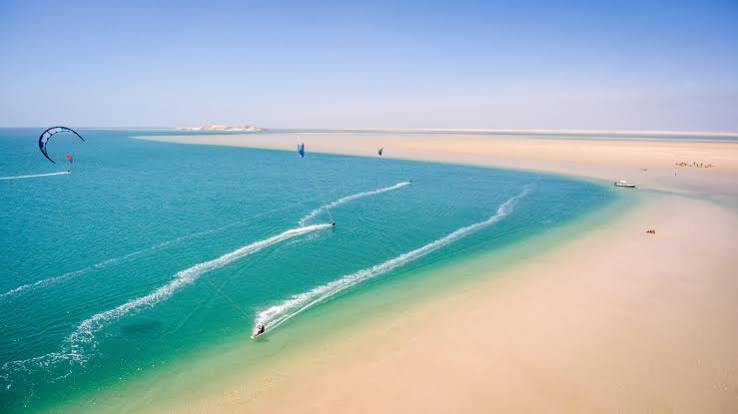
In short: most Dakhla kite camps sit in a line along the lagoon south of town, roughly between the PK25 and PK28 markers, where the water is flat, shallow, and warm enough to stand in. If you’re picking where to stay, the real question isn’t the pool or the food. It’s how far you are from the flat water, whether the camp has a good coach and rental gear, and how it gets you to the ocean wave spots when you want them. Here’s how to read the options.
Where the camps actually are
Dakhla is a long, thin peninsula. On one side is the open Atlantic, on the other a shallow lagoon that fills and empties with the tide. Nearly all the kite camps are strung out along the lagoon shore, about 25 to 30 kilometers south of Dakhla city, on the strip of land between the two. Locals and camps refer to spots by their kilometer marker on the road, the PK number. PK25 is the busy central zone with the widest flat-water area; camps a little further along are quieter but the ride to town is longer.
Being on the lagoon matters. You walk out of your room, cross the sand, and you’re on flat water in a minute or two. Camps set back from the shore, or on the ocean side, mean a shuttle to ride, which eats into your day.
The other thing the PK number tells you is how busy the water gets. The central zone has the most riders sharing it, which is reassuring when you’re learning and want people around, but it can feel crowded on a strong afternoon. Camps a few kilometers along trade that buzz for space and quiet, at the cost of a longer drive if you want a coffee in town or a night out. Neither is wrong; it comes down to wanting the scene or the solitude.
Lagoon or ocean: what you’re choosing between
The lagoon is why beginners and freestyle riders come to Dakhla. It’s flat, the wind is steady, and at low tide large stretches are waist-deep, so a bad crash means you stand up rather than swim. This is about the easiest place in the world to learn or to drill tricks.
The ocean side is a different sport. Reef and beach breaks like Speed Spot and the waves near the lagoon mouth (Foum) draw wave riders, but you need to be comfortable in the surf, and access usually means a 4×4 ride with the camp. If wave riding is your main plan, check that the camp runs regular ocean trips rather than treating them as an occasional extra.
When to come and what the wind does
Dakhla is windy for most of the year, which is the whole reason the camps exist. The strongest, most reliable season runs from around April through September, when the north to northeast trade wind blows day after day and you can plan a week expecting to ride most of it. Winter still gets good days but they’re less certain, and it’s cooler.
The water is Atlantic, so it’s cooler than the desert light suggests. Bring or rent a full wetsuit; a shorty isn’t enough for a long session, especially in the shoulder months. Most camps have a quiver of rental kites and boards, so you don’t have to fly with your own if you’d rather not.
All-inclusive, and why it’s normal here
Dakhla is remote. The nearest real town is a long way up the coast, and there’s very little within walking distance of the lagoon camps. That’s why almost every camp runs on a full-board basis: your room, three meals, and often the storage and beach setup are bundled together. It isn’t a marketing gimmick, it’s practical, because there’s nowhere else to eat once you’re out on the peninsula.
What varies is the standard. Some camps are simple rooms or fixed tents with shared spaces; others have private bathrooms, a heated pool, a proper kitchen, and a coaching setup with radios and a rescue boat. Decide what you care about before you compare, because the range is wide.
Picking the right camp for you
| If you are… | Look for |
|---|---|
| A complete beginner | A central lagoon spot (around PK25), certified instructors, shallow flat water on your doorstep |
| Improving freestyle | Steady wind, rental gear you can swap by size, wide flat area away from the crowd |
| A wave rider | A camp that runs scheduled ocean trips by 4×4, not just on request |
| Bringing a non-kiting partner | Pool, good food, and easy day trips to the White Dune, flamingos, or oyster farms |
| On a budget | Simpler tented camps further along the strip; expect a longer shuttle to town |
Book early for the April to September peak. The good camps fill months ahead, and because places are limited on the peninsula, there isn’t much last-minute availability to fall back on.
Planning your Dakhla trip? Compare a few camps side by side for location on the lagoon, board and kite rental, and whether meals and airport transfer are included before you commit. Check availability and options.
FAQ
Are Dakhla kite camps good for total beginners?
Yes, this is one of the best places anywhere to learn. The lagoon’s shallow, flat water and steady wind mean you can practice standing up rather than being tossed around in waves, and most camps have certified instructors and progression courses.
Do I need to bring my own gear?
No. Most camps rent a full range of kites and boards, so you can travel light. If you’re picky about your setup or riding a lot, bringing your own still makes sense, and camps have storage.
How many days should I stay?
A week is the common choice and gives you enough riding days even if one or two are light. Because getting to Dakhla takes time, a short weekend rarely feels worth the travel.
Is there anything to do when the wind drops?
Plenty. Camps run trips to the White Dune across the lagoon, to see flamingos, to the oyster farms, and to the hot spring inland, so a windless day isn’t a wasted one.
Planning your trip? Explore our Morocco desert tours from Marrakech and Agafay desert day trips.