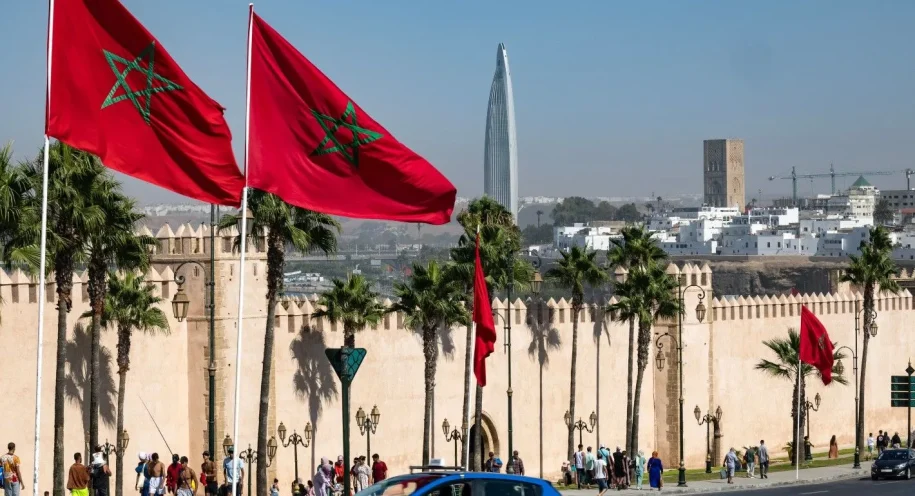
The flag of Morocco is one of the most recognizable national flags in the world. With its bold red background and green five-pointed star, the Moroccan flag represents faith, history, unity, and the royal heritage of the kingdom. It is a powerful symbol of national identity and pride for the Moroccan people.
Visiting Morocco? See our Agafay Desert guide.
What Does the Morocco Flag Look Like?
The Morocco flag consists of:
- A red background
- A green pentagram star (five-pointed star) in the center
This simple yet striking design has remained unchanged for more than a century and is deeply connected to Morocco’s monarchy and Islamic heritage.
Meaning of the Colors on the Morocco Flag
Each color on the Moroccan flag carries strong symbolic meaning:
- Red represents strength, bravery, and the historical connection to the Alaouite dynasty.
- Green symbolizes Islam, hope, and life.
Red has long been associated with Moroccan rulers and imperial cities, while green is considered a sacred color in Islam.
Meaning of the Green Star (Pentagram)
The green star in the center of the Morocco flag is known as the Seal of Solomon. It represents:
- Wisdom and balance
- Protection
- The link between God and humanity
- The five pillars of Islam
The interlaced shape of the star also symbolizes unity and harmony between spiritual and earthly life.
History of the Morocco Flag
Before 1915, Morocco used a plain red flag. In 1915, Sultan Moulay Youssef officially added the green pentagram star to distinguish Morocco’s flag from other red flags used in the region. This design has remained unchanged ever since and is protected by Moroccan law.
When and Where Is the Morocco Flag Displayed?
The Morocco flag is flown:
- On government buildings
- During national holidays
- At schools and public institutions
- During sports events
- On special occasions such as weddings and festivals
It is treated with great respect and is an important symbol of national unity.
Morocco Flag and National Identity
The Moroccan flag represents more than a country; it reflects Morocco’s long history, Islamic values, and royal tradition. For Moroccans, the flag stands for:
- Patriotism
- Stability
- Cultural pride
- Spiritual identity
You will see the Morocco flag everywhere—from city streets to desert camps—reminding visitors of the deep connection between tradition and modern life.
Conclusion
The Morocco flag is a powerful national symbol that reflects courage, faith, and unity. Its red background and green star tell the story of a kingdom rooted in history and guided by spiritual values. Understanding the meaning of the Morocco flag helps visitors better appreciate Moroccan culture and identity.
Where you will actually see the flag in Morocco
More often than in most countries, and in places a visitor does not expect. It flies over every public building, every school and every royal palace, and it appears on the facade of municipal offices in towns small enough to have one street. Police posts on the roads out of Marrakech carry it. So do a great many taxis, buses and lorries, where it is often hand-painted or stuck to the windscreen rather than issued by anyone.
On national holidays the effect is different in scale: flags go up across whole neighbourhoods, strung between balconies in the medina and hung down the length of apartment blocks in the newer districts. If your trip happens to fall on one, you will see the red and green before you see anything else, and the mood in the street is worth staying out for. Desert camps hang one at the entrance for the same reason a hotel does — it marks the place as Moroccan rather than generic.
The star, drawn in a single line
Look closely at a Moroccan flag and the pentagram is not five separate strokes. It is interlaced: one continuous line that crosses over and under itself and returns to where it began, with no start and no end visible. That is the detail most reproductions get wrong, and it is why a printed souvenir often looks subtly off next to a real one.
The geometry carries the meaning the page described above. A line that never breaks and returns to its origin is a figure of unity and continuity, which is precisely what the Seal of Solomon is understood to express — the knot between the spiritual and the earthly rather than two separate things placed side by side. The five points are read as the five pillars of Islam, and the single unbroken line as what holds them together.
Red and green outside the flag
The two colours are not confined to the flagpole, and noticing them is one of the quiet pleasures of travelling in Morocco.
| Element | What it means on the flag | Where else you meet it |
|---|---|---|
| Red | Strength, bravery, the Alaouite dynasty | The ochre walls and buildings of Marrakech, which is called the red city for exactly this reason |
| Green | Islam, hope, life | The glazed tiles on minarets, the green in zellige mosaic, the tilework of fountains and medersas |
| The interlaced star | Unity, protection, the five pillars | Carved into wooden doors, worked into metal lanterns, set into tiled floors |
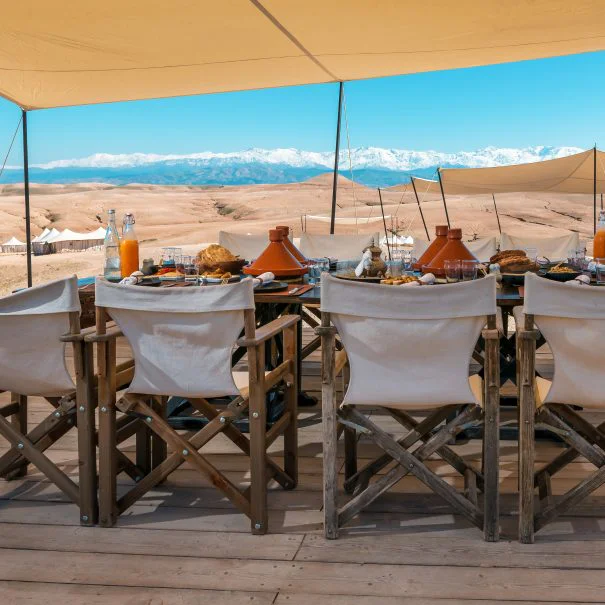
Marrakech makes the connection most obvious. The city's walls and older buildings are built from local earth and take their colour from it, and under late afternoon light the whole city reads as the same red as the flag. The Agafay plateau just outside it is the stone version of the same ground, pale and grey-brown rather than ochre, which is why the drive out of the city is also a change of colour.
What makes it unmistakable
A plain red field carrying a single green five-pointed interlaced star belongs to Morocco alone. Plenty of flags in the region use red, and several use a star, but the combination — one star, green, interlaced, centred on an otherwise empty red field — is not used by anyone else. That was the point of the 1915 change described above: a plain red flag was shared with others, and the star made it specific.
The practical consequence for a traveller is that you can identify it at a distance and from any angle, since the design has no top or bottom and reads the same hung vertically or horizontally. Few national flags manage that.
Courtesy around the flag
The page notes above that the flag is protected by Moroccan law and expected to be treated with respect. For a visitor that translates into a short and unsurprising list. Photograph it as much as you like, including on public buildings, which nobody minds. Do not wear it as clothing, use it as a towel on a beach or a pool lounger, or let it touch the ground. Do not drape it over a vehicle or a bag as decoration. If a camp or a riad has one up, leave it where it is.
None of this is policed at tourists in practice; it is simply the difference between a guest who has noticed where they are and one who has not. The same courtesy applies to images of the King, which you will see displayed in shops, cafes and public offices across the country.
Why so many people look this up
The question arrives from several directions at once. Some are planning a trip and want to recognise what they are about to see everywhere. Some have watched a football match and want to know what the badge on the shirt means. Students look it up for a project, and quiz players look it up afterwards. It is one of those small facts that is genuinely interesting once you have it: a design unchanged for over a century, chosen to make a country distinguishable, built around a figure drawn in one unbroken line.
If you are in the first group and the trip is still taking shape, the country under that flag is more varied than its most famous images suggest — a desert that is stone in one place and sand a day's drive further, mountains with snow on them above a city where it never snows, and an Atlantic coast that feels like neither. The flag is the same everywhere; almost nothing else is.
The flag on a match night
If you are in Morocco during an important football match, you will meet the flag in its loudest form. The national team draws a following that spills into the streets of every city, and on a big night the red and green is on car windows, on shoulders, painted on faces and hanging from balconies that had nothing on them that morning. Cafes put the match on outside, the medina's lanes fill after the final whistle, and the horns last well past midnight. It is one of the few occasions when a visitor sees the whole country doing the same thing at the same moment.
Practically, it is worth knowing before you book a quiet dinner. On a match night the city is joyful and extremely loud, restaurants empty during the game and fill afterwards, and taxis become hard to find in the hour around it. Travellers who plan for it enjoy it enormously; travellers who did not know it was on tend to spend the evening confused.
What a flag looks like after a season outside
A small thing, but it tells you something about the place. Flags flown in the south fade and fray quickly, because the sun is relentless and the wind carries fine sand that works like a file on fabric. On the Agafay plateau and further into the desert you see flags bleached towards pink, with the green of the star gone pale and the edge of the cloth worn into threads. They get replaced, but rarely in a hurry.
It is the same weathering that explains why desert camps replace canvas, why painted signs on the southern roads are often barely legible, and why anything left outside for a summer comes back changed. If you are wondering what the climate actually does to things rather than to people, a faded flag on a roadside post is the most honest gauge you will find.
Frequently Asked Questions
What do the colors of the Morocco flag mean?
Red represents strength and the royal heritage, while green symbolizes Islam and hope.
What does the star on the Morocco flag represent?
The green pentagram represents the Seal of Solomon and the five pillars of Islam.
When was the current Morocco flag adopted?
The current design was adopted in 1915.
Why is the Morocco flag red?
Red has been the traditional color of Moroccan dynasties and represents bravery and power.
Is the Morocco flag legally protected?
Yes, the Moroccan flag is protected by law and must be treated with respect.
Can visitors buy or display the Moroccan flag?
Yes, they are sold openly in markets and shops and nobody objects to a visitor owning one. The expectation is about how it is treated rather than who holds it: displayed or folded, not worn, not used as a cloth and not left on the ground.
Is the pentagram a religious symbol?
It is understood as the Seal of Solomon and carries religious meaning, including the reading of its five points as the five pillars of Islam. It is not a sectarian emblem or a modern addition: the same interlaced star appears in Moroccan architecture and craft long before it appeared on the flag.
Why do so many Moroccan taxis and buses carry the flag?
Partly official, mostly not. Public and licensed vehicles often display it by convention, and a great many drivers add one themselves. It reads as pride rather than regulation, in the same way the King's portrait appears in private shops that are under no obligation to hang it.
Has the design ever changed since 1915?
No. As the history section above sets out, the green pentagram was added to the plain red field in 1915 under Sultan Moulay Youssef, and the flag has carried the same design since. That continuity is unusual among national flags and is part of why it is so widely recognised.
Discover things to do in Agafay Desert

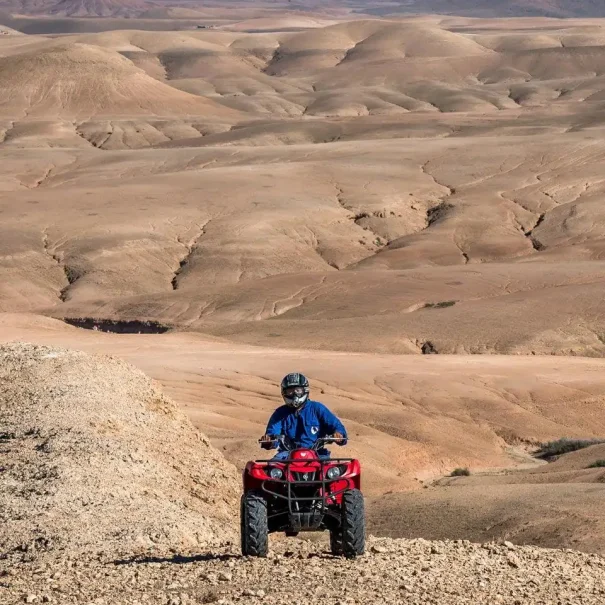
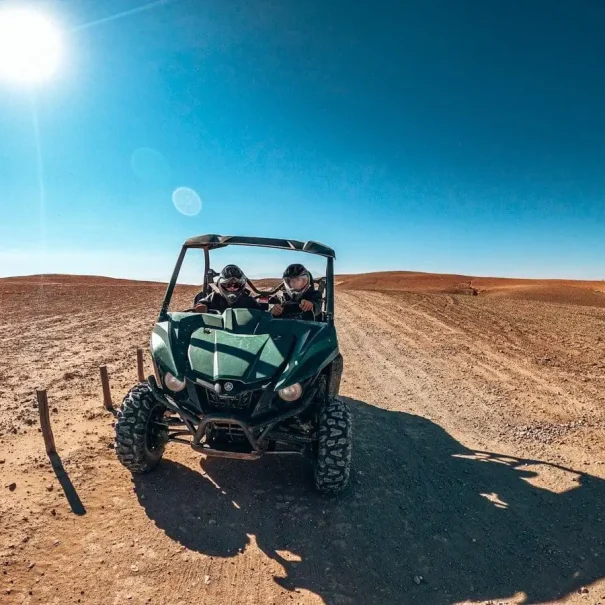
Agafay Desert Quad Biking Tour – Off-Road Adventure from Marrakech
Private tour · priceFrom €35 per quadAll our tours are private. These prices are for a private experience, not a shared group. We confirm the exact price on WhatsApp; you book directly with the local families and camps, no middlemen.Get
GO EXPLORE
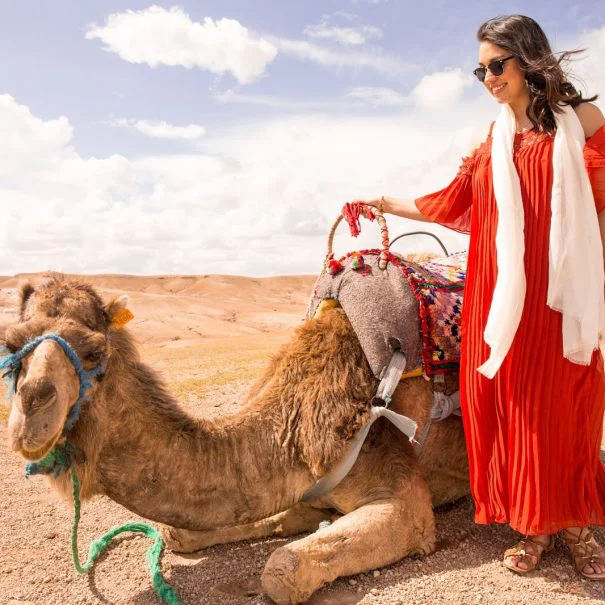
Sunset Agafay Desert Tour – Evening Desert Experience from Marrakech
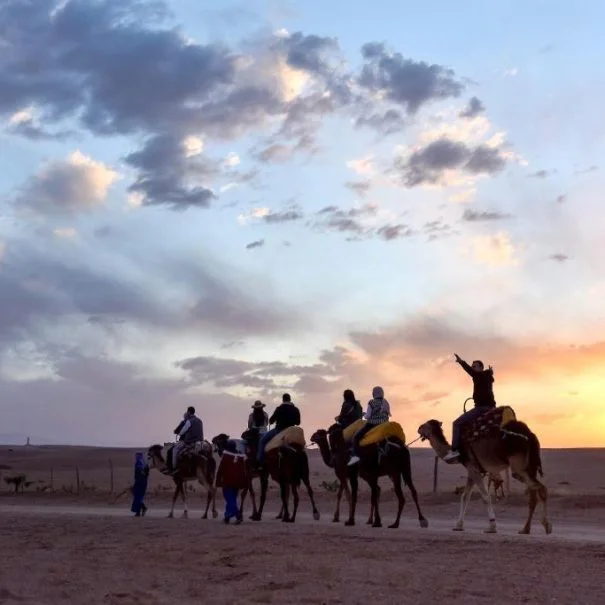
Sunset Agafay Desert Tour – Evening Desert Experience from Marrakech The perfect tour for a romantic escape in desert The Sunset Agafay Desert Tour is one of the most magical experiences near Marrakech. Just 40 minutes from the city, Agafay
GO EXPLORE
Moroccan Cooking Class in Agafay Desert | Learn with Locals
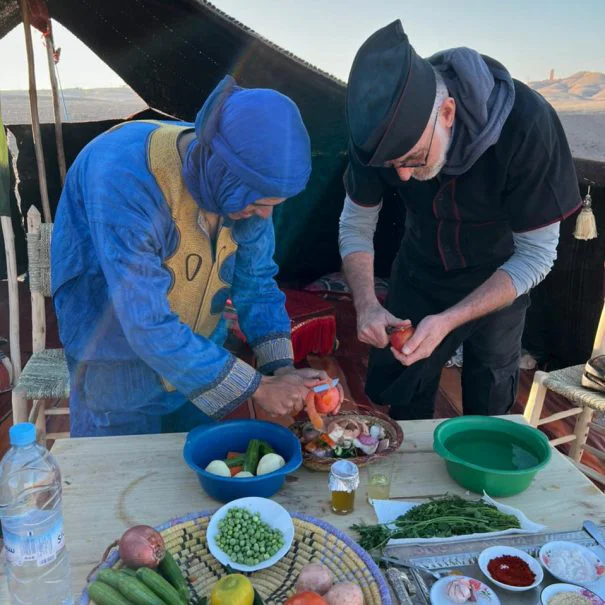
Private tour · priceFrom €120 per personAll our tours are private. These prices are for a private experience, not a shared group. We confirm the exact price on WhatsApp; you book directly with the local families and camps, no middlemen.Get
GO EXPLORE
Hot-Air Balloon over the Agafay Desert: Sunrise Flight from Marrakech
Private tour · priceFrom €185 per personAll our tours are private. These prices are for a private experience, not a shared group. We confirm the exact price on WhatsApp; you book directly with the local families and camps, no middlemen.Get
GO EXPLORE