
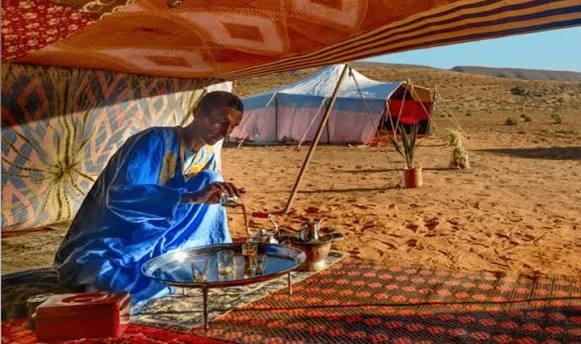
In short: Yes, the Moroccan Sahara is one of the safest desert destinations in North Africa for tourists. The main tourist routes around Merzouga (Erg Chebbi) and Zagora are well-patrolled and see thousands of visitors year-round; the real risks are heat, dehydration, and driving fatigue rather than crime or conflict.
Planning a desert trip? See all private Morocco desert tours from Marrakech.
Is the Moroccan Sahara safe for tourists right now?
The tourist Sahara sits in southeastern Morocco, hundreds of kilometres from any troubled border. Erg Chebbi near Merzouga is roughly 560 km (9-10 hours) from Marrakech, and Erg Chigaga near M’Hamid is a similar distance via Zagora. These regions have a mature tourism economy, a visible Gendarmerie Royale presence, and low crime. Petty theft can happen in busy medinas like Marrakech or Fez, but in the desert camps and villages, violent crime against travelers is rare. Morocco is politically stable and has no active conflict on its main tourist circuits. The one border to avoid is the desert frontier with Algeria east of Merzouga and Figuig, which is closed and militarized; standard camel treks and 4×4 tours never go near it.
What are the real dangers in the desert?
The genuine risks are environmental. Summer temperatures (June-August) regularly hit 45°C or more, and heatstroke is a real threat if you skip water or hike at midday. Nights in winter (December-February) drop near or below freezing, so unprepared travelers get cold fast. Long transfers over the Tizi n’Tichka pass (about 2,260 m) involve winding mountain roads where road accidents are the leading cause of tourist injury in Morocco, so choose a rested driver and a well-maintained vehicle, and avoid operators who push exhausting late-night driving. In the dunes themselves, getting disoriented on foot after dark is possible, so never wander from camp alone. Scorpions and snakes exist but bites are uncommon; shake out your shoes in the morning.
Is it safe for solo travelers and women?
The Moroccan Sahara is safe for solo travellers and women who take normal precautions, especially on organised tours with a guide.
Yes, with normal precautions. Many women travel Morocco’s desert solo every year and report feeling secure, especially on organized tours where you are with a guide and a group. In Marrakech and other cities you may face persistent touts and unwanted attention; dressing modestly (shoulders and knees covered) and joining a reputable tour reduces hassle sharply. In the desert villages and camps, hospitality culture runs deep and harassment is minimal. Share your itinerary with someone at home, keep your phone charged, and book accommodation and transfers through a licensed local agency rather than accepting rides from strangers at bus stations. Our Morocco Desert guide covers itinerary planning in detail.
How do you choose a safe desert tour?
A safe desert tour uses insured 4×4 vehicles or comfortable minivans and licensed guides.
Book with an operator that uses insured 4×4 vehicles or comfortable minivans and licensed guides. A standard 3-day/2-night Marrakech-Merzouga tour runs roughly 80-150 EUR per person for a shared group trip, while private tours and luxury camps cost more depending on comfort. Be wary of prices that look far too cheap, as they often mean overcrowded vans and long, exhausting daily drives. Confirm the itinerary avoids driving after dark on rural roads, includes bottled water, and pairs the camel trek (about 1 to 1.5 hours at walking pace to camp) with an experienced camel handler. For a shorter, lower-risk taste of the desert, the Agafay stone desert is only about 40 minutes from Marrakech and requires no long transfer.
What should you pack and prepare for safety?
The essentials are 2 to 3 litres of water per person per day, high-SPF sunscreen, a wide-brimmed hat, sunglasses and a scarf against sun and blowing sand.
Bring at least 2-3 litres of water per person per day, high-SPF sunscreen, a wide-brimmed hat, sunglasses, and a scarf or cheche to shield against sun and blowing sand. Pack a warm layer even in summer for cold desert nights, closed shoes for the dunes, and any personal medication. Carry a paper copy of key phone numbers since mobile signal fades in remote ergs. Travel insurance that covers medical evacuation is strongly recommended. Note that Morocco’s emergency numbers are 19 for police and 15 for ambulance; the tourist police (Brigade Touristique) operate in major cities. See our Morocco Desert guide for a full packing checklist.
Is Merzouga safe?
Merzouga is one of the calmest places in Morocco for visitors. It is a small village at the foot of the Erg Chebbi dunes, living off desert tourism, with a permanent gendarmerie presence on the main road. The risks are not criminal, they are practical: dehydration, sun, cold nights in winter, and getting lost if you walk into the dunes alone at night.
- Walk into the dunes with a guide, or stay within sight of the camp lights.
- Carry water, even for a short camel ride, and cover your head between 11:00 and 16:00.
- Nights drop sharply from November to February: a warm layer is not optional.
- Keep the driving to daylight. The long roads south are shared with trucks and animals.
On our 3-day private Merzouga tour, the vehicle, the driver-guide and the camp are ours or booked directly by us, so someone is responsible for you from pick-up to drop-off.
Frequently Asked Questions
The questions below cover drinking water, summer travel and other practical safety concerns in the Sahara.
Is it safe to drink the water in the desert? Stick to bottled or filtered water. Tap water in remote areas is not reliable for tourists, and dehydration is the biggest health risk, so drink steadily throughout the day.
Can I visit the Sahara during summer? You can, but June to August brings extreme heat of 45°C or more. Spring (March-May) and autumn (September-November) are far more comfortable and safer for outdoor activity.
Is terrorism a risk in the Moroccan Sahara? The tourist Sahara has an excellent security record and a heavy Gendarmerie presence. Incidents on the main desert circuits are extremely rare; the deep, closed Algerian border zone is the only area to avoid entirely.
Is it safe to ride camels and sleep in a desert camp? Yes. Reputable camps use trained handlers and calm, well-cared-for camels, and overnight camps are secure and staffed. Follow your guide’s instructions and stay within the camp after dark.
Do I need a guide, or can I go alone? You can self-drive the paved routes, but crossing dunes or reaching remote ergs like Erg Chigaga without an experienced guide is dangerous. For the desert interior, always go with a licensed operator.
👉 Planning your trip? Ask our local agency on WhatsApp.