
Comparing camps? See all our Agafay desert camps, how to choose the right camp and the Agafay day pass guide.
All our tours are private. These prices are for a private experience, not a shared group. We confirm the exact price on WhatsApp; you book directly with the local families and camps, no middlemen.
In short: For a night in a Morocco desert camp, pack layers you can peel on and off (warm days, cold nights), a scarf against sand, closed shoes plus sandals, a headlamp, a power bank, and a small daypack for the road. You are away from shops for hours, so bring what you cannot buy at Erg Chebbi or Erg Chigaga.
Why does packing for a desert camp feel different?
The desert is a place of extremes, and that dictates your bag more than any style choice. From Marrakech, Merzouga is roughly 560 km and 9-10 hours away, usually split over a 3-day tour; from Fes it is about 470 km and 7-8 hours. Zagora is closer, around 360 km and 7 hours on a 2-day trip. That means you spend a full day in a vehicle before you ever see a dune, then step out into a landscape where the temperature can swing 20 degrees between the golden afternoon and the small hours of the night. The first time I did this, I underpacked warm clothes and overpacked outfits. Reverse that and you have it right.
What clothes should I actually bring?
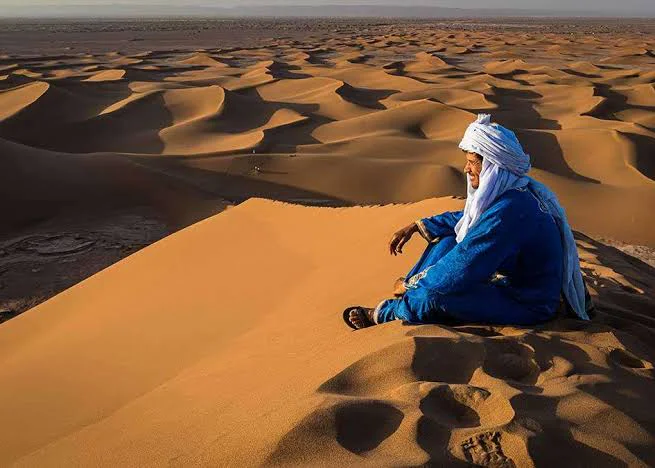
Think in layers. A breathable base (cotton or light merino), a long-sleeve shirt for sun and mosquitoes, and one genuinely warm layer, a fleece or a puffer, for the evening around the fire. Even in the best season, October to April, winter nights near Erg Chebbi turn genuinely cold, and you will want a hat. In summer, daytime highs hit 40C and above, so loose long sleeves protect you better than a tank top. Bring a scarf or lightweight shesh: it shields your face from wind-blown sand on the camel ride and doubles as a pillow or head-cover. Modest, loose clothing also sits more comfortably in rural Morocco. Pack light on outfits; nobody in the dunes is counting.
What about shoes, sun and sand protection?
Two pairs cover everything: closed shoes or trainers for the 4×4 track and any dune walking, and sandals you can slip off for the soft sand around camp. Sand gets everywhere, so pack a small drawstring bag for sandy shoes and a microfibre towel. Sun protection is non-negotiable, a wide-brim hat, real sunglasses, and high-SPF sunscreen and lip balm, because shade essentially does not exist out there. A few resealable plastic bags keep sand out of your camera and phone; grit and lenses are old enemies.
Which gadgets and small items are worth the space?
A headlamp or small torch is the single item people forget and always regret; camps run on limited solar power and the walk to your tent at night is pitch dark under a stunning sky. Bring a power bank, because charging is scarce and you will burn battery on photos of the tallest dunes at Erg Chebbi, which rise to around 150 m. Carry your own refillable water bottle and drink far more than you think. Small extras earn their place: wet wipes and hand sanitiser, a basic first-aid kit with any personal medication, earplugs, and a little cash in dirhams for tips or a drink, since cards are useless in the sand. For the deeper, remote Erg Chigaga near M’Hamid, reached only by 4×4, assume even less infrastructure and pack accordingly.
Do I need to haul my whole suitcase into the dunes?
No, and please do not try. On most tours your main luggage stays in the vehicle or at a hotel, and you carry only an overnight daypack to the camp by camel or 4×4. Pack that small bag the night before with your warm layer, headlamp, water, toiletries, a phone charger and a change of clothes. A shared 3-day Merzouga tour typically runs about 80-150 EUR per person, and the camps provide bedding, blankets and dinner, so you are packing comfort items, not survival gear. If you are only doing Agafay, the rocky stone desert 40 minutes from Marrakech, note it is not sand dunes and nights are milder, though a warm layer is still smart. For the full picture, see our Morocco Desert guide and this related guide.
Frequently Asked Questions
Do desert camps provide blankets and bedding? Yes. Standard and luxury camps supply beds, sheets and thick blankets, so you do not need a sleeping bag. Pack warm sleepwear for winter nights, which get cold even under blankets.
Is there electricity to charge my phone? Usually only limited solar power, and often just in a communal area for a few hours. Bring a fully charged power bank and do not count on charging overnight.
What should I wear on the camel ride? Long, loose trousers and closed shoes are most comfortable, plus a scarf to cover your face against sand and sun. Avoid shorts, as the saddle can chafe.
Can I buy anything I forget once I am there? Barely. Villages like Merzouga have small shops, but once you leave for the camp you are hours from any store. Pack sunscreen, medication and a torch before you go.
How cold does it really get at night? In winter, desert nights can drop near or below freezing, while summer nights stay mild after 40C-plus days. October to April is the best season, always with one warm layer packed.
👉 Planning your trip? Ask our local agency on WhatsApp.