
In short: Tap water in Moroccan cities is chlorinated and generally treated, but most travelers stick to sealed bottled water to avoid an upset stomach. In the deep desert around Merzouga or Erg Chigaga, water at camps is trucked in or drawn from wells, so bottled or purified water is the safe rule.
Water worries are one of the most common questions we get before a Sahara trip, and it is a fair one. The desert is not the place to spend a night sick. Here is what actually matters, based on the routes people really travel.
Can you drink the tap water in Morocco?
In big cities like Marrakech, Fes, and Ouarzazate, tap water is treated and chlorinated. Locals drink it daily. As a visitor, though, your gut is not used to the local microbes and mineral content, so even perfectly legal water can cause a day or two of stomach trouble. Most travelers we guide simply buy sealed bottled water, which is cheap and everywhere. A large bottle costs only a few dirhams (well under 1 EUR) in a shop, more at a cafe or hotel. Brushing your teeth with tap water in a city is usually fine; drinking liters of it as a newcomer is where people run into problems.
What about water at desert camps in Merzouga or Erg Chigaga?
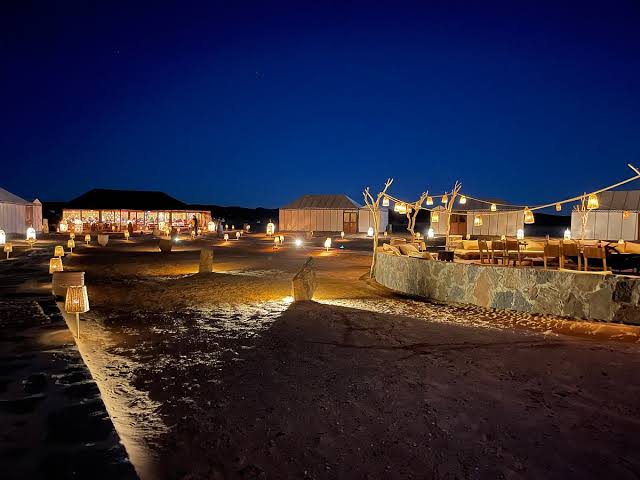
Out at the dunes there is no municipal supply. Camps near Erg Chebbi at Merzouga, where the tallest dunes reach around 150m, get their water trucked in from the nearest village or pumped from local wells. The remote Erg Chigaga camps near M’Hamid, reached only by 4×4, are even more dependent on stored and delivered water. For washing and showers this water is fine. For drinking, every reputable camp provides sealed bottled water, and you should treat that as your only drinking source. When we run tours, bottled water is included at meals and we carry extra crates in the vehicle. Never drink from a well or an oasis pool, however clear it looks.
How much water should you actually carry?
The desert dehydrates you faster than you expect because sweat evaporates instantly in the dry air, so you do not feel wet. Plan on at least 3 to 4 liters per person per day, more in the shoulder-season heat. The best travel window is October to April, when days are pleasant and nights can turn genuinely cold, especially in winter. If you visit in summer, when daytime temperatures top 40C, double your intake and avoid midday activity entirely. On the long transfers, this matters too: Marrakech to Merzouga is around 560km and 9 to 10 hours, usually split over a 3-day tour, while Fes to Merzouga is about 470km and 7 to 8 hours. The shorter Marrakech to Zagora route is roughly 360km and about 7 hours, often done as a 2-day trip. Buy several big bottles before you leave the last real town, because roadside stops thin out fast.
Is a camel trek or overnight in the dunes different?
On a camel trek into Erg Chebbi you are away from any tap for hours, so water is something you carry, not something you find. Camps stock drinking water at the tents, but between the trailhead and the camp you rely on what is in your daypack. We tell guests to bring at least 1.5 liters just for the sunset ride, plus a refill for the next morning. A reusable bottle you fill from sealed large bottles keeps plastic waste down and keeps water within reach on the dune.
What about the Agafay desert near Marrakech?
Agafay is a rocky, stone desert about 40 minutes from Marrakech, not a sea of sand dunes. Because it is so close to the city, its camps are on or near the municipal water network or use regular tanker deliveries, so water access is far easier than in the deep Sahara. The same advice still applies: drink sealed bottled water. Agafay is a great option if you want a desert night without the long drive, and it pairs well with a fuller Sahara trip. For the bigger picture, see our Morocco Desert guide.
Simple habits that keep you healthy
Stick to sealed bottled water for drinking and ice. Peel fruit yourself. Use hand sanitizer before meals, since desert washing water is limited. Carry oral rehydration salts from any pharmacy; they cost almost nothing and fix mild dehydration fast. A shared 3-day Merzouga tour typically runs about 80 to 150 EUR per person, and reputable operators build bottled water into that. For route planning and packing, our related guide covers the rest.
Frequently Asked Questions
Is bottled water easy to find in the desert? Yes in towns like Merzouga and Zagora, but it gets scarce at remote camps and along empty stretches of road. Stock up in the last proper town before heading into the dunes.
Can I use a water filter or purification tablets instead of bottled water? A good filter or purification tablets work as a backup, especially for reducing plastic. Still, sealed bottled water is the simplest safe choice and is widely provided at camps.
Is the shower water at desert camps safe? It is fine for washing, showering, and brushing teeth if you avoid swallowing it. Just do not drink it; keep sealed bottled water for that.
How do I know if I am getting dehydrated? Dark urine, headache, and fatigue are early signs. In the dry desert air you may not feel thirsty until you are already behind, so drink on a schedule rather than waiting.
Is tap water safe for babies or people with sensitive stomachs? No, use sealed bottled water for infants, formula, and anyone prone to stomach issues, even in cities where locals drink the tap water without problems.
👉 Planning your trip? Ask our local agency on WhatsApp.
Planning your trip? Explore our Morocco desert tours from Marrakech and 2-day Zagora tour.