
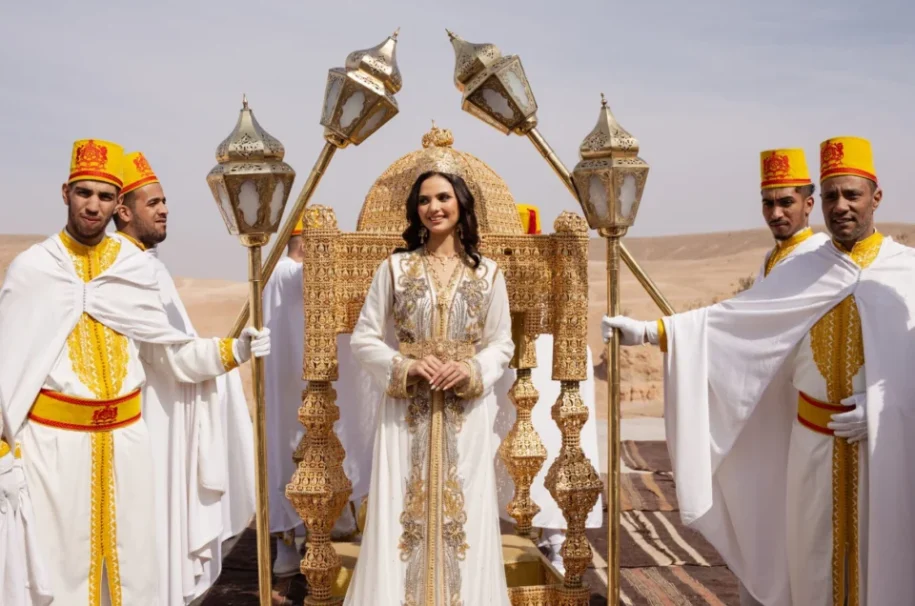
A traditional Moroccan wedding is not a single ceremony but a multi-day celebration built around music, feasting and the bride’s dramatic transformations. It blends Amazigh (Berber), Arab-Andalusian and regional customs, and its most iconic moments are the henna night, the bride’s entrance on a golden amaria, and her succession of hand-embroidered takchitas. This guide walks through each tradition — and how travellers can experience them near Marrakech.
Key Takeaways
- A Moroccan wedding is traditionally spread over several days, centred on family and community.
- The henna night, the amaria entrance and the negafa (bridal stylist) are its signature elements.
- The bride typically changes into several outfits — often five to seven — each in a different regional style.
- Customs vary widely between Amazigh mountain weddings, urban Fassi weddings and Saharan celebrations.
- You don’t need to be getting married to experience it — a wedding-dress photoshoot in the Agafay Desert lets you wear the attire and pose on an amaria.
What happens at a traditional Moroccan wedding?
A Moroccan wedding unfolds over several stages rather than a single day. It often begins with the khotba (engagement) and gift exchange between families, followed by the henna night, the wedding celebration itself, and in some regions a gathering on the seventh day (the sabaa). Throughout, the two families and the wider community share in music, food and ritual — the celebration is collective, not just for the couple.
The henna night (Laylat al-Henna)
The henna night is one of the most cherished traditions. Female relatives and the negafa apply intricate henna designs to the bride’s hands and feet, a ritual associated with protection, fertility and good fortune. It is a warm, women-centred evening of music, sweets and ululations, with the bride often dressed in green or another traditional colour.
The takchita and kaftan: the bride’s many outfits
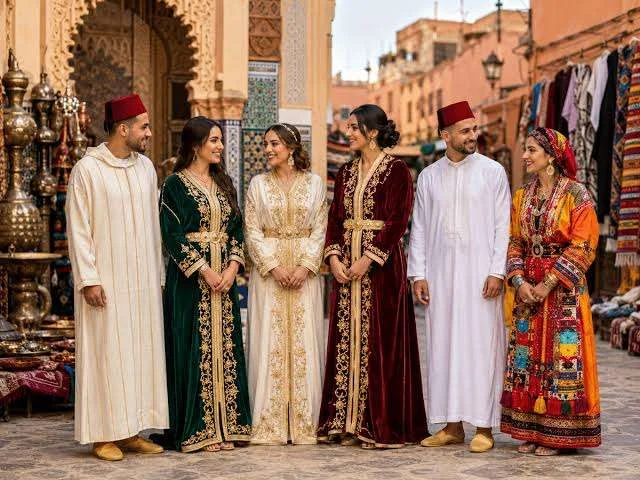
Over the course of the celebration the Moroccan bride changes into several outfits — commonly five to seven — each a different regional style and colour. The takchita is a layered two-piece gown worn with an ornate belt (mdamma), while the kaftan is a single flowing robe; both are richly embroidered and paired with heavy gold jewellery. Styles range from the gold-threaded Fassi (Fez) look to silver-adorned Amazigh and Saharan dress. The negafa orchestrates each change and its matching jewellery.
The amaria: the bride’s grand entrance
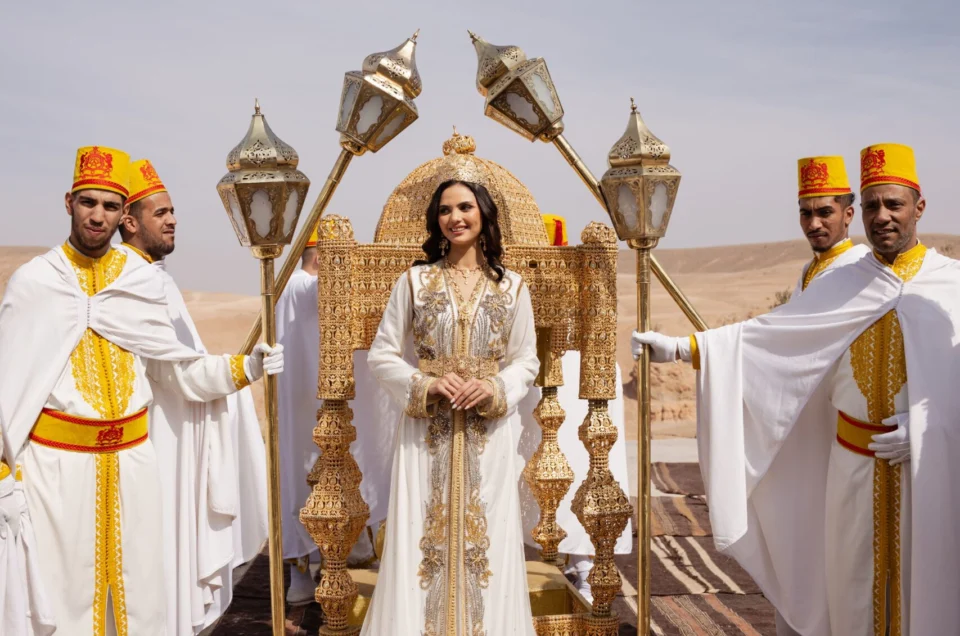
The amaria (also written a’amariya) is an ornate, often gilded throne or palanquin on which the bride — and sometimes the couple together — is carried aloft into the celebration by strong bearers, to drumming and zaghareet (ululations). It is the wedding’s most theatrical and most photographed moment, turning the bride’s arrival into a royal procession.
The negafa: mistress of the wedding
The negafa is the bride’s attendant and stylist — a respected profession in Morocco. She dresses the bride, manages the succession of takchitas and jewellery, and choreographs the key moments of the night. A skilled negafa is a keeper of regional dress traditions, and families often book one well in advance.
Music, food and the celebration
Music carries a Moroccan wedding from dusk to dawn. Depending on the region and family, you may hear an Andalusian orchestra, festive chaabi, Gnawa rhythms or the percussion of the dqqa marrakchia in Marrakech, punctuated by ululations. Feasting is generous — often a shared meal of pastilla, méchoui (roast lamb) and tagines, followed by pastries and mint tea.
Regional and Amazigh (Berber) variations
There is no single Moroccan wedding. Amazigh mountain weddings favour silver jewellery and distinctive dress, and the famous Imilchil Marriage Festival in the High Atlas is a centuries-old gathering associated with betrothals. In the south, Saharan and nomad communities around M’hamid and Zagora celebrate with desert music and hospitality, while urban Fassi weddings are known for their elaborate attire and Andalusian repertoire.
Experience Moroccan wedding traditions yourself
You don’t need to be getting married to step into these traditions. Near Marrakech, a traditional Moroccan wedding-dress photoshoot in the Agafay Desert lets you wear a hand-embroidered takchita, take your place on a golden amaria and be photographed against the dunes — a memorable way for couples, families and travellers to experience the costume and ceremony first-hand. You can also combine it with other events and experiences in the Agafay Desert.
Frequently asked questions
How long does a Moroccan wedding last?
Traditionally several days, from the engagement and henna night through the wedding celebration and, in some regions, a gathering on the seventh day. Modern weddings are often condensed but still span an evening that can last until dawn.
What is the amaria in a Moroccan wedding?
The amaria is an ornate, often gilded throne or palanquin on which the bride is carried into the celebration by bearers, to music and ululations. It is one of the wedding’s most iconic moments.
What does the bride wear at a Moroccan wedding?
The bride changes into several outfits — often five to seven — including the takchita and kaftan, each in a different regional style and colour, with elaborate gold or silver jewellery.
What is a negafa?
The negafa is the bride’s professional attendant and stylist, who dresses her, manages the outfit changes and jewellery, and choreographs the key moments of the wedding.
Can tourists experience Moroccan wedding traditions?
Yes. Beyond attending a wedding by invitation, travellers can experience the attire and the amaria through a wedding-dress photoshoot experience in the Agafay Desert near Marrakech.
A desert ceremony. Couples who want these traditions in a desert setting near Marrakech hold an Agafay desert wedding — the camps are 40 minutes from the city.