
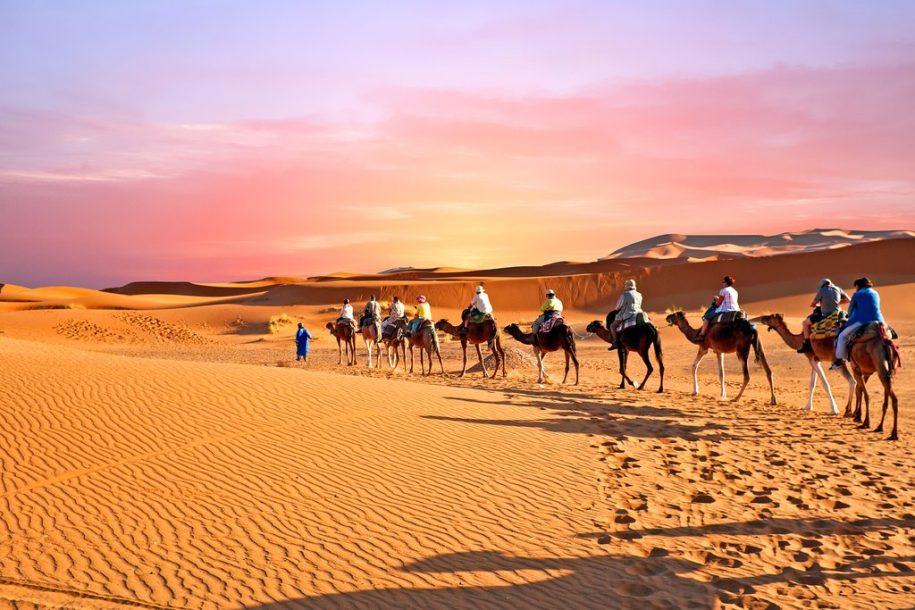
In short: A camel trek in Merzouga takes you into the towering dunes of Erg Chebbi, usually a 1 to 1.5 hour ride at walking pace to a desert camp for the night. Sunrise and sunset are the moments to aim for. Expect roughly €25–€45 for a short ride, or about €60–€120 per person for an overnight trek with camp, dinner and breakfast included.
What is a camel trek in Merzouga really like?
Merzouga sits on the western edge of Erg Chebbi, Morocco’s tallest dune sea, where the crests reach around 150 metres in the southeast of the country near the Algerian border. A trek here means riding a dromedary in single file, roped nose-to-tail into a small caravan, led on foot by a local cameleer. You do not steer or control anything, the pace is a slow, rocking walk, and the whole point is to sink into the quiet as the sand shifts from ochre to deep red. The classic outing leaves about an hour to 90 minutes before sunset, climbs the first big ridge, and reaches a Berber camp in time to watch the sun drop. Two practical notes from the saddle: the wooden frame is padded with blankets but still firm, so grip the front peg on steep descents, and getting up (back legs first, a sharp lurch forward) surprises everyone the first time. It is a gentle, meditative experience, not an adrenaline sport. For the bigger picture, see our Morocco Desert guide.
How long does the ride last and how far do you go?
A standard sunset or sunrise trek covers roughly 2 to 4 kilometres each way and lasts about 60 to 90 minutes in the saddle, which is enough to leave the village lights behind and feel genuinely ringed by dunes. Overnight packages ride out in the late afternoon, spend the night at a fixed camp tucked between the crests, then ride back at first light, so you are on the camel for around an hour twice. Longer 2 to 3 day expeditions exist for those who want to move camp to camp deeper into the erg, but most travellers find a single night is plenty, since camel-back travel is hard on the lower back and inner thighs after the first hour.
How much does a camel trek cost?
Prices depend on ride length and camp comfort. A short 1–2 hour ride runs about €25–€45 per person. A standard overnight trek with a night in a shared Berber camp, dinner, drumming round the fire and breakfast is roughly €60–€90 per person. Upgraded camps with private tents, en-suite bathrooms and proper beds push it to €100–€180 per person. Tipping the cameleer €3–€5 per person is customary. Booking directly with a Merzouga-based operator is usually cheaper and more flexible than a package sold from Marrakech, though a Marrakech package bundles the long transfer for you.
When is the best time to go?
The comfortable seasons run October to April, with pleasant days and cool, clear nights. Spring (March to May) and autumn (September to November) are the sweet spots, with daytime highs around 25–30°C. Summer (June to August) is brutal, often above 45°C, so treks run only at dawn and dusk and mid-camp hours are sweltering. Winter days are bright and mild but desert nights drop close to freezing, so bring real layers. Whatever the month, camel rides only operate at the two golden hours, both for the heat and for the light.
What should you bring and wear?
Pack a scarf or cheche to wrap over your face against blowing sand, plus sunglasses, sunscreen and a hat for the ride out. Wear long, loose trousers rather than shorts, as bare legs rub raw against the saddle blanket within twenty minutes. Closed shoes keep the sand out, though many people ride barefoot or in sandals for the short haul and carry them in a bag. Bring a warm fleece for the night even in shoulder season, a headlamp for finding your tent, a power bank, and at least 1.5 litres of water. Leave your suitcase at the Merzouga hotel and take only a small daypack onto the camel.
How do you get to Merzouga?
Merzouga is about 560 km from Marrakech, a long 9 to 10 hour drive almost always split over two days via Ait Ben Haddou (the UNESCO kasbah near Ouarzazate), the Todra or Dades gorges and Ouarzazate itself. From Fes it is roughly 470 km and 7 to 8 hours. A Supratours or CTM bus runs overnight from the big cities, and Errachidia airport is around 1.5 hours away if you fly part of the route. Because the transfer is so long, most visitors treat the camel trek as the climax of a 3-day desert tour rather than a standalone outing.
Frequently Asked Questions
Is a camel trek in Merzouga safe and ethical? Yes, when you choose an operator that keeps caravans small, limits ride length and gives the animals shade and water. Ask before booking and walk away from anyone overloading or mistreating the camels.
Can children or older travellers ride? Children from about age 6 and most adults manage the short ride fine, since camels move at a slow walk and a guide leads on foot. Anyone with serious back or hip problems may prefer a 4×4 transfer straight to camp.
Do I need to book in advance? In peak season (spring, autumn and the Christmas period) booking a day or two ahead secures the better camps. Off-season you can often arrange a trek the same day in Merzouga village.
What happens if there is a sandstorm? Guides may shorten, postpone, or swap the camel leg for a 4×4 run to camp. Storms usually blow through within hours, and reputable camps keep you sheltered and fed regardless.
Is Wi-Fi or electricity available at the camp? Standard camps have solar lighting and a charging point but little or no Wi-Fi. Luxury camps have more reliable power. Either way, treat the night as a genuine digital detox.
👉 Planning your trip? Ask our local agency on WhatsApp.
Ready to book this trip? We run it as a private tour: 3 Days from Marrakech to Fes via Merzouga Desert. Message us on WhatsApp for dates and a quote.
Wondering where else in Morocco the camels are worth it? This country-wide camel trekking guide separates the magic from the photo-ops.
Planning your trip? Explore our Morocco desert tours from Marrakech, 3-day Marrakech to Merzouga tour and 2-day Zagora tour.