
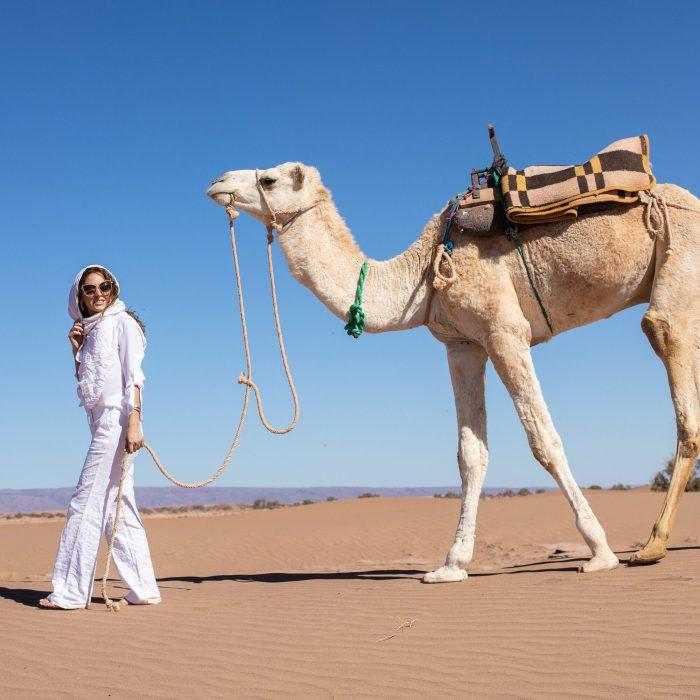
In short: Desert nights in Morocco cool down fast — often 20–25°C below the midday peak, dropping to 5–10°C in winter and close to freezing in the deep dunes of Merzouga. Dress in layers: a base layer, a warm fleece or wool mid-layer, a windproof jacket, plus a scarf, a beanie and closed shoes for the evening around the fire. Bring these on any Morocco desert tour and the cold that catches most first-timers off guard becomes a non-issue.
Comparing camps? See all our Agafay desert camps, how to choose the right camp and the Agafay day pass guide.
Why does the Sahara get so cold at night?
Sand and dry desert air hold almost no heat. Once the sun drops, the ground radiates its warmth straight back into a cloudless sky, and within an hour the temperature falls off a cliff. In Merzouga or Zagora you can bake at 38°C at 4pm and be shivering at 8°C by midnight in November. Even in the rocky Agafay desert, about 40 minutes from Marrakech, spring evenings slide to 10–14°C after a day that felt like high summer. That afternoon-to-night gap is the single fact that surprises most travellers, so the rule is simple: pack for two seasons in one day.
What should you actually wear after sunset?
Build three layers you can add or peel off as the evening turns:
- Base layer: a long-sleeve cotton or merino top and long trousers. Merino wicks the sweat from a warm camel ride and still keeps you warm two hours later when you have stopped moving.
- Mid-layer: a fleece, a thick jumper or a light down jacket — this is the exact piece most people leave behind and regret by 9pm.
- Outer layer: a windproof or light waterproof shell. Desert wind after dark cuts straight through knitwear and is the main reason people feel cold even when “dressed warm”.
Add a wool beanie (you lose a lot of heat through your head sitting still by the fire), a large scarf that doubles as protection against blowing sand, and warm socks. For footwear, closed trainers or light boots beat sandals once the sand cools and the ground goes cold underfoot.
How does what to wear on a Sahara night change by season?
Season decides almost everything. In summer (June–August) nights stay mild at roughly 18–22°C, so a light jacket or a long-sleeve shirt over a T-shirt is enough. In spring and autumn (March–May, September–November), the best window to visit, evenings sit around 8–15°C and you genuinely want a real fleece plus a wind layer. In winter (December–February) the deep dunes can hit 0–5°C, so add thermal underwear, gloves and a proper warm coat. October to April is the comfortable season overall; high summer is punishing by day and only mild at night. Our Morocco Desert guide breaks down the month-by-month climate in more detail.
What if you are staying overnight in a desert camp?
Standard and luxury camps in Agafay, Merzouga and Zagora supply thick blankets and heavy wool covers, and many have a wood stove or a brazier by the dining tent, but the sleeping tents are not centrally heated. In practice you sleep in your base layer and warm socks, and you keep the fleece within arm’s reach for the coldest stretch of the night, roughly 4–6am, when the temperature bottoms out just before sunrise. Pack a small headlamp for the walk to your tent in the dark, and a lip balm and moisturiser — the dry night air chaps lips and skin surprisingly fast. Camp comfort varies with price: simpler tents are more basic, higher tiers add en-suite bathrooms and thicker bedding, but none replace the layer you bring yourself.
What should you leave behind?
Skip the heavy suitcase of clothes; camps have limited space and you often reach them by 4×4 and then camel. Leave brand-new stiff hiking boots at home (blisters on soft sand are miserable), and never bet on shorts and flip-flops for the evening, no matter how hot the drive in felt. Choose dark, dust-coloured fabrics over white — fine sand shows far less on them. For photos under a sky thick with stars, a warm layer that still looks good beats a bulky ski jacket you will not want in every frame. See our Morocco Desert guide for a full packing checklist before you book a tour.
Frequently Asked Questions
How cold does the Moroccan desert get at night? It ranges from about 18°C on a summer night to near 0°C in the deep winter dunes of Merzouga. Spring and autumn nights typically fall between 8 and 15°C.
Do I need a coat for a Sahara night in summer? Not a heavy one, but bring a light jacket or fleece. Even July nights cool to around 18–22°C, which feels chilly after a 38°C day.
Are desert camps heated? The sleeping tents are usually not centrally heated, but camps supply thick blankets and often a stove or fire pit in the common area. Sleeping in a base layer and warm socks keeps you comfortable.
What shoes are best for the desert at night? Closed trainers or light boots with socks. Sandals let in cold sand once the sun sets, and closed shoes also protect against rough ground and the odd scorpion.
Should women dress differently in the desert? The practical layers are the same for everyone. A long scarf is especially useful for warmth, sand protection and modesty when passing through villages en route to the dunes.
👉 Planning your trip? Ask our local agency on WhatsApp.