
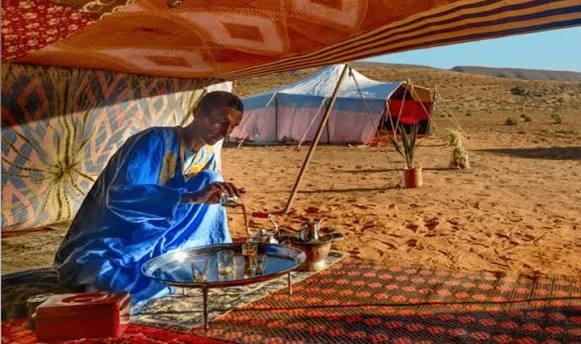
In short: Staying healthy in Morocco’s Sahara comes down to managing heat, hydration and sun. Drink 3-4 litres of water a day, cover your skin, and avoid the midday peak sun when summer dunes near Merzouga can top 45 C. In winter the risk flips to cold, with desert nights near freezing. With basic precautions a desert trip is safe and comfortable for most travellers.
How hot does the Moroccan Sahara actually get?
Temperatures swing dramatically between day and night. Around Merzouga and the Erg Chebbi dunes (about 560 km southeast of Marrakech, a 9-10 hour drive usually done as a 3-day tour), summer afternoons from June to August routinely hit the mid-40s C, and the sand surface climbs far hotter, which is why walking barefoot on dunes at midday is a genuinely bad idea. Even then, nights are far cooler. In winter (December-February) days are mild but nights can fall to around freezing, so the health risk flips from heatstroke to cold exposure. The closer Agafay stone desert, about 40 minutes from Marrakech, runs a touch cooler and suits short trips. The most comfortable months are March-April and October-November. Whatever the season, plan strenuous activity for the first hours after sunrise and the last before sunset.
How much water should you drink and how do you carry it?
Plan for 3-4 litres per person per day in warm months, and more if you are trekking or riding camels for hours in the sun. Dehydration is the single most common problem operators see, and it creeps up quietly. Carry an insulated bottle and top it up at your riad or camp before heading out, because shops are scarce once you leave the paved road. If you feel dizzy, headachy or stop sweating, add an oral rehydration sachet, sold cheaply in any Moroccan pharmacie. Go easy on caffeine and alcohol, which speed fluid loss. A field-tested rule: if your urine is dark you are already behind, so sip steadily through the day rather than gulping a litre at once when you finally feel thirsty.
How do you protect against sun and sand?
The desert sun is intense even in cooler months and there is essentially no natural shade on the dunes. Use a high SPF, reapply every couple of hours, and wear a wide-brimmed hat or a local cheche (turban scarf), which doubles as a filter against blowing sand. Long, loose, light-coloured clothing actually keeps you cooler than bare skin and prevents burns. Good UV sunglasses matter more than people expect, because glare off pale sand causes eye strain and headaches quickly. Pack SPF lip balm and a small bottle of saline drops for dust. When the wind picks up, wrap the cheche across your nose and mouth, which is exactly what your guide will do. For a fuller packing and season breakdown, see our Morocco Desert guide.
What are the signs of heat exhaustion and heatstroke?
Heat exhaustion shows as heavy sweating, weakness, nausea, a fast pulse and cool clammy skin. If you feel it, move to shade, loosen clothing, sip water with salts, and cool your neck and wrists. Heatstroke is a medical emergency: hot dry skin, confusion, a temperature above 40 C and sometimes no sweating at all. Cool the person aggressively and get help immediately. Mobile signal exists near Merzouga village but is patchy deep in the dunes, so tell your guide how you feel early rather than pushing through to “not spoil the trek”. Children and older travellers overheat faster and need more shade breaks and water, so build the schedule around the most heat-sensitive person in your group.
What about stomach upsets, food and small injuries?
Travellers’ diarrhoea is common everywhere in Morocco. Drink bottled or filtered water, skip ice of unknown origin, and favour hot, freshly cooked tagines over food that has sat out. Pack a small kit: rehydration salts, an anti-diarrhoeal, paracetamol, antiseptic wipes, plasters and any personal medication in your hand luggage. Scorpions and snakes exist but bites are rare; shake out your shoes each morning and never reach blindly under rocks. Camel riding can strain the hips and lower back, so ask to dismount and walk part of the way if you get sore, remembering the camel is led at a slow walk and stopping is easy. Travel insurance that explicitly covers desert activities is strongly recommended, and a night in a well-run camp usually includes a guide with basic first-aid training. Our Morocco Desert guide covers choosing a reputable camp.
Frequently Asked Questions
Is it safe to visit the Sahara in summer? Yes, if you adjust your schedule. Do activities at sunrise and after 5pm, rest in shade at midday, and hydrate constantly. Spring and autumn are far more comfortable, though.
Do I need vaccinations for the Moroccan desert? No special desert vaccines are required. Make sure routine jabs are current and consider hepatitis A and typhoid, which are common recommendations for Morocco. Check with a travel clinic before departure.
Can I drink the tap water? It is safer to drink bottled or filtered water in rural Morocco, and to use it for brushing teeth too. A reusable filter bottle cuts plastic waste on longer trips.
What should I do about cold desert nights? Even in summer pack a light fleece; in winter bring a warm layer, hat and gloves. Good camps supply thick blankets, but temperatures near freezing genuinely surprise first-time visitors.
How do I avoid feeling ill on the drive? The road from Marrakech crosses the High Atlas at the Tizi n’Tichka pass (about 2,260 m). It is not high enough for serious altitude sickness, but the winding climb causes motion sickness, so take tablets beforehand and sit near the front with a window cracked.
👉 Planning your trip? Ask our local agency on WhatsApp.
Planning your trip? Explore our Morocco desert tours from Marrakech, 3-day Marrakech to Merzouga tour and 2-day Zagora tour.