
In short: The fennec fox is Morocco’s most iconic Sahara animal, a tiny nocturnal desert fox with oversized ears that lives around the dunes of Erg Chebbi (Merzouga) and Erg Chigaga. You won’t spot one on a day trip, but a 1-2 night desert camp during the cool season (October to April) gives you the best real chance to hear, and occasionally glimpse, one at dusk or after dark.
What exactly is a fennec fox?
The fennec (Vulpes zerda) is the smallest fox in the world, weighing under 1.5kg, with ears so large they look borrowed from an animal ten times its size. Those ears are working equipment: they radiate heat to keep the fox cool and pick up the faint sound of insects and rodents moving under the sand. It is fully nocturnal, sleeping out the 40C+ summer heat in deep burrows and emerging only after sunset. Locals call it fennec from the Arabic word for fox, and it appears on Algeria’s football crest and across North African folklore. In Morocco it belongs to the true Sahara zones in the southeast, not the coast or the Atlas.
Where in Morocco can you actually see one?
Your realistic zones are the far southeast, where the sand seas begin. Erg Chebbi near Merzouga, home to Morocco’s tallest dunes at roughly 150m, is the most accessible. Erg Chigaga, the remoter and wilder sea of dunes reached by 4×4 beyond M’Hamid, has less human traffic and arguably better odds of undisturbed wildlife. Both are true erg (dune) deserts. Note that Agafay, the rocky stone desert only about 40 minutes from Marrakech, is not fennec country: it is a hammada landscape of grey stone, not the soft sand these foxes den in. If seeing genuine Sahara wildlife is your goal, you have to go to the real dunes, and that means the long drive southeast.
How do I get to the dune country?
From Marrakech, Merzouga is roughly 560km and 9-10 hours by road, which is why it is almost always sold as a 3-day tour crossing the High Atlas via Ait Ben Haddou and the Todra Gorge. From Fes it is shorter, about 470km and 7-8 hours. If you are tight on time, Zagora is closer, around 360km and about 7 hours from Marrakech, done as a 2-day tour, though its dunes are smaller than Erg Chebbi’s. Erg Chigaga is reached by continuing past Zagora to M’Hamid, then transferring to 4×4 for the final stretch across open desert. Shared 3-day Merzouga tours typically run in the range of about 80-150 EUR per person depending on season and comfort level.
What are my real chances of spotting a fennec?
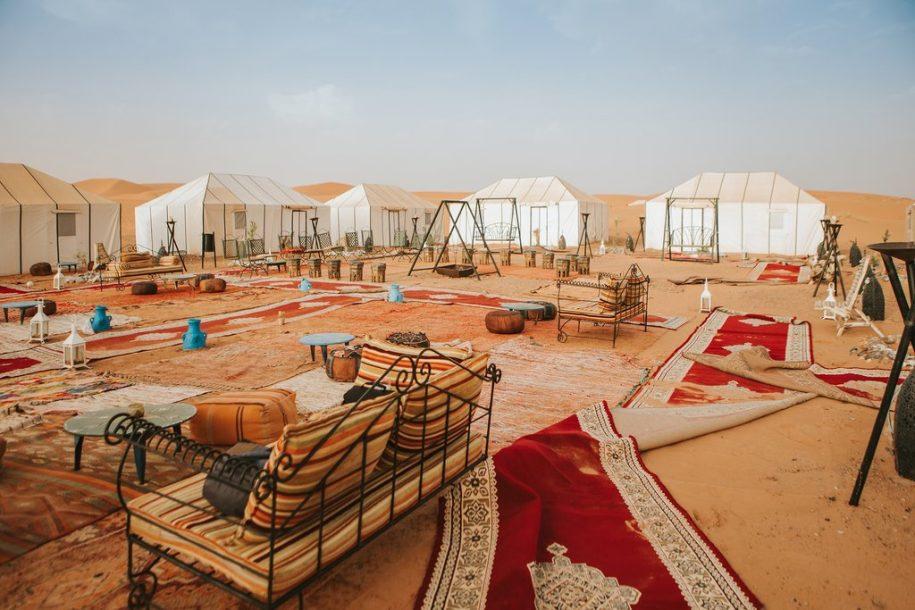
Honest answer: sightings are a bonus, not a guarantee. Fennecs are shy, small and active only at night, so most visitors hear the yips and rustling rather than see the animal. Your odds improve if you stay overnight at a desert camp rather than daytripping, keep camp lights low, stay quiet after dinner, and walk a short distance from the fire with a guide. Some camps near the dune edges see foxes drawn by scraps, though feeding wildlife is discouraged. On my own nights at Erg Chebbi the reward was often just tracks in the sand at dawn, the delicate double line of tiny paw prints tracing where a fox had crossed while everyone slept.
What other Sahara wildlife might I encounter?
The desert is quietly full of life once you know what to look for. Expect desert hedgehogs, gerbils and jerboas (hopping rodents), skittering agama lizards and the occasional monitor. Birdwatchers do well with desert larks, wheatears, and raptors circling the thermals. You may also meet the domesticated stars of any trip: dromedary camels for the sunset ride, and the herding dogs of nomad families. Snakes and scorpions exist but keep to themselves, especially in the cool months; shake out your shoes and you will be fine. The dunes are also one of Africa’s best stargazing spots, so the night wildlife walk doubles as an astronomy session.
When is the best time to go?
The best time to look for fennec foxes and other Sahara wildlife is October to April, when daytime temperatures are comfortable for dune walks.
Aim for October to April. Summer in the deep desert regularly pushes past 40C, punishing for you and driving animals deep underground by day. The cool season brings comfortable daytime temperatures for dune walks, though winter nights can turn genuinely cold, so pack a warm layer even if the afternoon felt like beach weather. Spring and autumn are the sweet spot: mild, clear, and the desert’s creatures are more active around dawn and dusk. For the full logistics of routes, camps and what to pack, see our Morocco Desert guide.
Frequently Asked Questions
The questions below cover whether you can hold a fennec fox, whether they are dangerous and how to observe them responsibly.
Can I keep or hold a fennec fox in Morocco? No. They are wild, protected animals; handling or buying them is illegal and harmful. Observe respectfully from a distance and never feed them.
Are fennec foxes dangerous? Not to humans. They are tiny, shy and flee from people. The main courtesy is not to disturb or corner them.
Will I see one in the Agafay desert near Marrakech? Very unlikely. Agafay is stony hammada, not sand dunes, so it lacks the burrowing habitat fennecs need. Head to Merzouga or Erg Chigaga for real Sahara wildlife.
Do I need a special tour to see wildlife? No special safari is required, but staying overnight at a dune camp and going out quietly at night with your guide massively improves your chances over a daytime visit.
Is one night enough? One night gets you the core experience, but two nights in the dunes give calmer evenings and better odds of a sighting. Read more in our related guide.
👉 Planning your trip? Ask our local agency on WhatsApp.
Planning your trip? Explore our Morocco desert tours from Marrakech, 3-day Marrakech to Merzouga tour and 2-day Zagora tour.