
In short: Dayet Srji is a shallow seasonal salt lake just west of Merzouga that fills after autumn and winter rains, drawing greater flamingos, waders, ducks and desert specialists. Come between roughly November and April, early morning, and you can watch pink flocks wade the water with the Erg Chebbi dunes glowing behind them.
Want to explore beyond Marrakech? See Ait Bouguemez valley trek from Marrakech or private day trips from Marrakech.
What is Dayet Srji and why do birds gather here?
Dayet Srji (sometimes spelled Dayet Sriji or Srij) is an endorheic salt lake sitting on the flat plain immediately west of the Erg Chebbi dune field, only a few kilometres from Merzouga village. It has no outlet, so rainwater collects here and slowly evaporates, leaving a broad, mirror-thin sheet that can stretch for a kilometre or more in a wet year. In the Sahara, standing water is rare and precious, which is exactly why it acts like a magnet for migratory and resident birds. When I first crested the last stretch of piste and saw a band of pink strung across the water below the 150-metre dunes, it did not look like the desert I had been driving through for hours.
The catch: this is a rain-fed lake, not a permanent one. In dry years, or by late spring, it can shrink to cracked mud or vanish entirely. Birdlife tracks the water, so your luck depends heavily on the season and recent rainfall.
Which birds can you actually see?
The headline act is the greater flamingo, which can appear in loose flocks when the lake is full. Around them you will often find ruddy shelduck, black-winged stilts, avocets, marbled duck, and a shifting cast of migrating waders and terns passing between Europe and sub-Saharan Africa. The surrounding stony plain and dune edges add true desert species: the striking desert sparrow around Merzouga, plus larks, wheatears, sandgrouse coming to drink, and, with patience, the elusive Egyptian nightjar. Raptors and the odd cream-coloured courser round out a good morning. Bring binoculars; the birds keep their distance across open water and heat haze builds fast after sunrise.
When is the best time to go?
The birding season overlaps neatly with the best time to visit the desert generally: roughly October to April. Water levels are usually highest and bird numbers best from late autumn through spring, after the rains. Spring migration (around March-April) can be especially rewarding for passing waders and terns. Avoid high summer, when temperatures push past 40C, the lake often dries out, and midday heat makes any walking miserable. Winter nights, by contrast, get genuinely cold, so pack layers for those pre-dawn starts. Whatever the month, go at first light: birds are active, the air is still, and the low sun on the dunes behind the water is unbeatable for photos.
How do you get to Dayet Srji from Merzouga?
The lake lies on the western edge of Erg Chebbi, a short drive or a manageable walk from most places in Merzouga. Many guesthouses can point you along the track or arrange a local driver; a 4×4 or even a stroll at dawn works when the ground is dry. Reaching Merzouga itself is the bigger journey. From Marrakech it is around 560km and 9-10 hours, usually sold as a 3-day desert tour over the High Atlas via Ait Ben Haddou and the Draa or Todra gorges. From Fes it is closer, about 470km and 7-8 hours. For orientation and options, see our Morocco Desert guide and our dedicated related guide to the Merzouga area.
How much does it cost and how should you plan it?
Dayet Srji itself has no entry fee; you are simply visiting an open desert lake. Your real spend is the tour or transport to Merzouga. Shared 3-day Merzouga tours from Marrakech typically run in the region of 80-150 EUR per person, usually covering transport, a night in a desert camp and some meals, though exact inclusions vary. A local guide who knows the birds and the water levels is money well spent if birding is your priority, and prices for that are best agreed directly on the day. If you are short on time and just want dunes near Marrakech, note that Agafay is a rocky stone desert only about 40 minutes away, but it has no lake and none of this birdlife, so for Dayet Srji you genuinely need to reach Merzouga.
Frequently Asked Questions
Are there always flamingos at Dayet Srji? No. Flamingos and the other water birds only appear when the lake holds enough water, which depends on recent rain. In a dry spell the lake can be empty, so check locally before making a special trip.
What is the best month for birdwatching there? The stretch from late autumn to spring, roughly November to April, is best, with March-April migration often excellent. Summer is too hot and usually too dry.
Do I need a 4×4 to reach the lake? Not necessarily. When the ground is dry you can walk from parts of Merzouga or take a normal transfer; a 4×4 helps in wet conditions or if you want to explore further around the dunes.
How much time should I allow? A dawn visit of two to three hours is enough to see the main birdlife around the lake. Serious birders often go on two mornings to improve their odds across changing light and water.
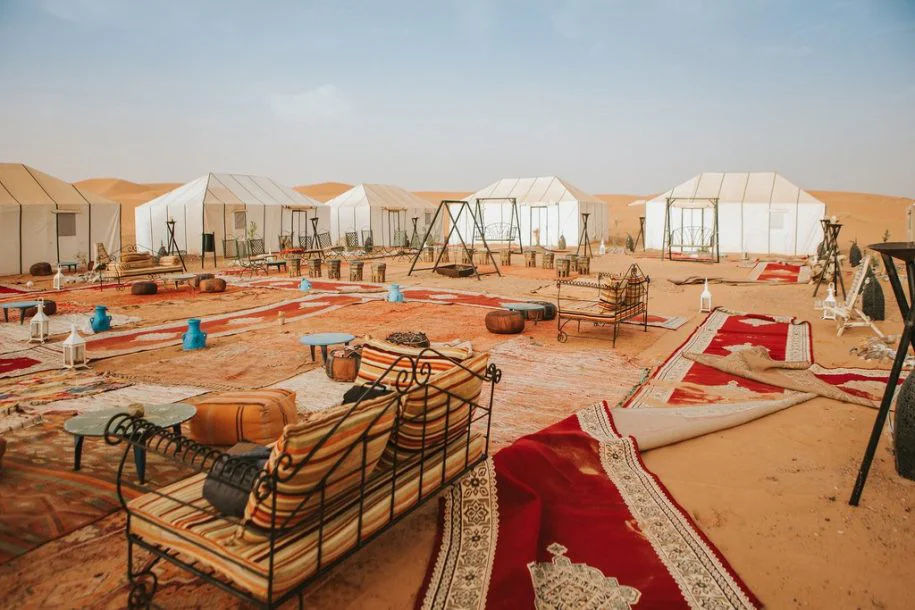
Can I combine birdwatching with the classic desert experience? Yes. Most visitors pair an early Dayet Srji session with a camel ride, dune sunset and a night in a desert camp, since the lake sits right beside Erg Chebbi.
👉 Planning your trip? Ask our local agency on WhatsApp.
Planning your trip? Explore our Morocco desert tours from Marrakech, 3-day Marrakech to Merzouga tour and 2-day Zagora tour.